|
|
|
|
|

|
|
Over the years, the USA produced many different cipher machines. In some
cases, these machines were developed by the NSA
(National Security Agency), but often they were developed and
built elsewhere, sometimes even as a Commercial off-the-shelf (COTS)
product.
As it is often unclear who the developer or the manufacturer of a machine
is, we've listed some of them on this page.
|
|
|
|
|
US cipher machines on this website
|
|
|
Based on the C-38,
Boris Hagelin developed the M-209
for the American Army, shortly before the outbreak of WWII.
The small compact mechanical machine
remained in service until the late 1960s.
As the machine could be broken by the Germans in less than 4 hours,
it was only used for tactical messages. The M-209 was built
under licence by several companies, such as Smith Corona.
➤ More information
|
|
|
The BC-38 was a motor-driven, keyboard-operated, mechanical cipher machine
built by Hagelin in Sweden.
Like the M-209
it was based on the C-38.
As it was compatible with the M-209, it was often used in large
communication centres.
The BC-38 was also used by other countries during and after WWII,
just like the later BC-543.
➤ More information
|
|
|
The ECM Mark II was a cipher machine based on the electromechanical
rotor principle. It was developed by the USA shortly before WWII and
was used during the war by the Allied forces.
It has been in service until the 1950s and was even used by NATO
for some time after WWII.
➤ More information
|
|
|
The TSEC/KL-7 was an off-line cipher machine built in the 1950s
by the US National Security Agency (NSA) and served during an
important part of the Cold War. It was used by the USA and manu of
its NATO partners.
Like the German Enigma machine, it
uses rotors and alphabet substitution as its main principle.
➤ More information
|
|
|
One of the first fully electronic US cipher machines was the KW-7.
It was introduced around 1960 and was used by the US Navy, NATO,
Australia and New Zealand,
and by the Foreign Office of several friendly nations.
The KW-7 was used until the mid-1980s, and was replaced by the
KG-84
and eventually by the much smaller KIV-7.
➤ More information
|
|
|
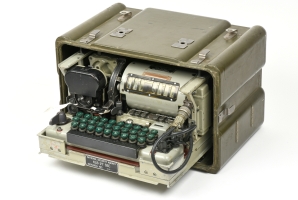
The KL-51 replaced the aging KL-7
in the US Army in the early 1980s.
It was a fully electronic machine that was also used by NATO and by
the Canadian Forces, where it was known as RACE.
KL-51 is a compact unit that was used for offline encryption and
decryption of teleprinter messages. It can be connected to an external
teleprinter and an external paper tape puncher.
➤ More information
|
|
|
A key transfer device is an electronic device that is used (most commonly
by the military) for the distribution of cryptographic material, such as
crypto keys and frequency hopping tables.
Key fillers often use a standard data protocols,
but proprietary protocols are used as well.
Many key fill units have the same 6-pin U-229 connector
allowing connection to standard radio sets, such as
HAVE QUICK
and SINCGARS.
➤ More information
|
|
|
The KY-68 was a digital secure voice terminal (crypto phone),
developed by the NSA
and used by the US Army and Navy. It was introduced in the early
1990s and was used until 2010. They have since been
replaced by the STE.
➤ More information
|
|
|
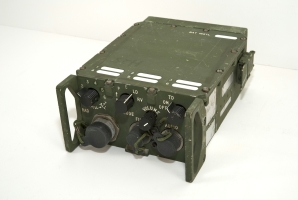
The KY-57 was a wide-band voice encryption device developed by the USA
during the late 1970s to replace the ageing
NESTOR voice crypto systems.
For many years it was the US Army's main crypto 'workhorse'.
➤ More information
|
|
|
Although certainly not the most secure solution, the KY-189 voice scrambler
offered reasonable security for tactical applications in the early 90s.
The unit is housed in a standard military handset and can be connected
to existing VHF and UHF radios. It was powered by an internal 9V battery,
or by the radio to which is was connected.
➤ More information
|
|
|
SIGSALY was the world's first secure unbreakable wireless telephone
encryption system, developed during WWII by
Bell Labs in the US, and
built by Western Electric in New York.
SIGSALY was introduced in 1943 and was first used for secure conversations
between London and Washington. In total, 12 SIGSALY terminals were built,
each of which consisted of more than 30 full-hight 19" racks and four
turntables.
➤ More information
|
|
|
KY-9 was a narrow-band voice encryption system that was developed in the
late 1950s. It had a data rate of 1650 baud and could be used on ordinary
analogue telephone lines, but had a rather bad audio voice quality.
It was approved for all levels of classification and was installed with
the Chiefs of Staffs, the Joint War Room, NORAD, the US President,
the British Prime Minister and several US Embassies.
➤ More information
|
|
|
KY-3 was a wide-band voice encryption system, developed by Bendix Corporation
for the NSA. It was introduced in 1962/63 and had an excellent voice quality,
but could be used one high-fidelity subscriber lines only.
The image on the right shows the KYX-9 remote desk set that was commonly
used to operate the KY-3. There was also an internal KYX-10 unit.
➤ More information
|
|
|
HY-2 was the successor to the KY-9. It had a slightly better data rate
(2400 baud), but had to be used in combination with the large external
KG-13 key generator.
Nevertheless, the audio quality not very good,
resulting in a typical 'Mickey Mouse' style voice.
For this reason, U.S. President Lyndon B. Johnson refused to use the
HY-2 and preferred the much better KY-3 whenever it was available.
➤ More information
|
|
|
KG-13 was a fairly large key generator/mixer, developed by the
NSA
around 1963. It was fully transistorized and built with
FLYBALL technology.
KG-13 was intended for use with an external data-generating device, such
as the HY-2 voice digitiser or vocoder,
and approved by the NSA for all levels of classification.
➤ More information
|
|
|
STU-I was the first generation
secure digital telephone,
developed by the NSA
in the late 1960s and the early 1970s. It was a bulky
unit consisting of a large cabinet containing the actual electronic
circuits and a desktop terminal that was similar to a normal telephone
set.
The STU-I is also known as the KY-70. It replaced the
KY-3 and was
succeeded in the 1980s by the STU-II (KY-71).
➤ More information
|
|
|
The STU-II was the second generation
secure telephone
developed by the NSA in the 1980s.
It replaced the older STU-I
and the KY-3.
The STU-II is also known as KY-71 or TSEC/KY-71.
The STU-II consisted of a large rackmount unit and a telephone-style
control unit (shown here).
➤ More information
|
|
|
Secure Terminal Equipment (STE) was developed by the
NSA in the early 1990s as the successor to the
extremely successful STU-III.
It was built under contract by L3 Communications
and can be connected to a variety of networks,
including PSTN, ISDN and (optionally) VoIP.
STE units were still in use in 2012.
➤ More information
|
|
|
The CVAS III was an NSA Type 3 cryptographic product,
developed and buit by A-O Electronics in the USA.
It was used for unclassified but sensitive information.
It used cryptographic algorithms such as DES and EDAS.
➤ More information
|
|
|
The KG-84 is an electronic encryption device developed by the
National Security Agency (NSA) in the USA. It was used for
secure transmission of digital data over a variety of networks,
such as landlines, satellites, microwave links and Telex.
Many modern encryption devices are still backwards compatible
with the KG-84, for example the SafeNet KIV-7
(see below).
➤ More information
|
|
|
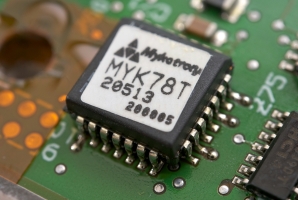
KIV-7 is a compact miniaturized embeddable version of the
military KG-84 encryption device. It was developed
by AlliedSignal Corporation and manufactured in the mid-1990s
by Mykotronx
(now: SafeNet) in the USA,
as a commercial-off-the-shelf (COTS) product, to meet the growing demand
for secure data communication links.
➤ More information
|
|
|
CK-42 was a miniature encryption device for high-speed burst transmissions
by secret agents.
It was used by the CIA in a variety of countries, in combination with
spy radio sets like the CDS-501
and the RS-804.
➤ More information
|
|
|
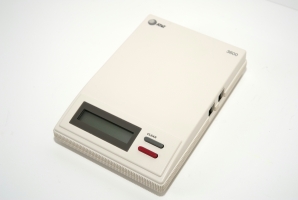
The TSD-3600-E was an advanced telephone security device, developed by AT&T (USA)
in 1992. It was based on the controversial Clipper Chip, forcing
users to escrow their cryptographic keys.
The TSD-3600 was a small white box that was connected between the handset and
the phone.
➤ More information
|
|
|
AT&T (later: Lucent) was appointed in 1987 as one of the manufacturers
of the STU-III secure telephones. The 1100 shown here was one of the
last STU-III phones developed by AT&T.
➤ More information
|
|
|
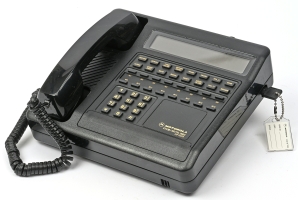
Motorola was one of three manufacturers appointed by the US Government
to develop and make STU-III secure telephones, based on the 1987 design
by the NSA.
Motorola subsequently released the SECTEL range of secure
phones, of which the SECTEL 1500 delivers the highest level of security.
➤ More information
|
|
|
During the American Civil War (1861-1865), the Confederate States of America
used a variant of the Vigenère Cipher (sometimes called the Alberti Disc)
to protect the contents of their messages.
Although the cipher has often been claimed to be unbreakable, it can be
broken by various hand and mathematical methods.
➤ More information
|
|
|
The same cipher disc was used during the Spanish-American War of 1898,
when a paper-based version of it was included in the
Giddings Field Message-Book, a smal A6-size
booklet with a green leather cover and a short pencil.
Message, written down on a message pad, were encrypted with the cipher disc
and then filed in a pocket of the book.
➤ More information
|
|
|
The Jefferson Disk is a manual cipher system that consists of a set of
wheels on an axle. Each wheel has the 26 letters of the Latin alphabet
on its circumfere in a pre-determinded scrambled arrangement. Each wheel
has a unique number and the order is determinded by a code book.
The M-94 was derrived from this system.
➤ More information
|
|
|
As a proof of concept for the so-called
Vernam Cipher (1918),
the Western Union Telegraph Company built the Telekrypton around 1933.
The machine was extremely large and had a number of weaknesses,
but was later improved and used as the basis for the
British/Canadian Rockex cipher machine.
➤ More information
|
|
|
The KSD-64 is a so-called Key Storage Device developed by the
NSA for use with electronic cryptographic equipment, such as
the STU-III secure telephones.
It can be used for a variety of applications, ranging from Key Fillers
to Crypto Ignition Keys (CIKs).
➤ More information
|
|
|
The Clipper Chip was a chipset developed and promoted by the US Government.
It was intended for the implementation in secure voice equipment, such as
crypto phones, and required users to give their cryptographic keys in escrow
to the government.
This would allow law enforcement agencies to decrypt any
traffic for surveillance and intelligence purposes.
➤ More information
|
|
|
The KY-879/P was a Digital Message Device (DMD) made by
Racal in the UK for the US Special Forces.
It allows burst transmissions of coded messages
and minimizes the risk of detection by means of
Radio Direction Finding.
➤ More information
|
|
|
Most American and NATO equipment uses a standardized connector for audio,
digital data and (crypto) FILL purposes. This connector is commonly called
U-229 and is used for audio and digital data.
It supports various data protocols, such as DS-102 and DS-101.
We have collected all currently known pinouts of this connector on a single
page.
➤ More information
|
|
|
|
|
|
Any links shown in red are currently unavailable.
If you like the information on this website, why not make a donation?
© Crypto Museum. Created: Tuesday 04 August 2009. Last changed: Wednesday, 06 May 2026 - 20:43 CET.
|
 |

|
|
|




![Great Seal of the United States of America. Image via Wikipedia [1].](../../spy/img/usa.jpg)