|
|
|
|
|

|
|
← 31217 ← Stopfen Stasi DDR
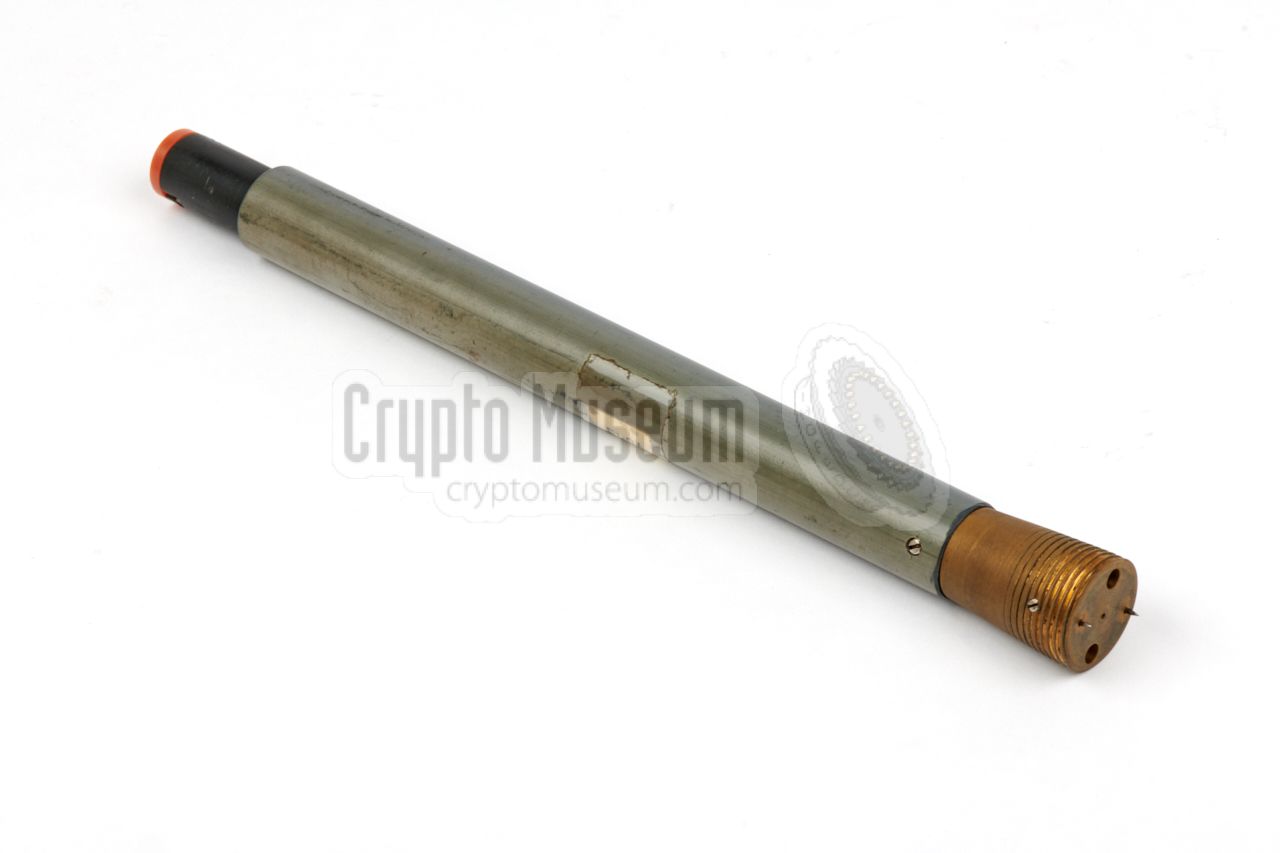
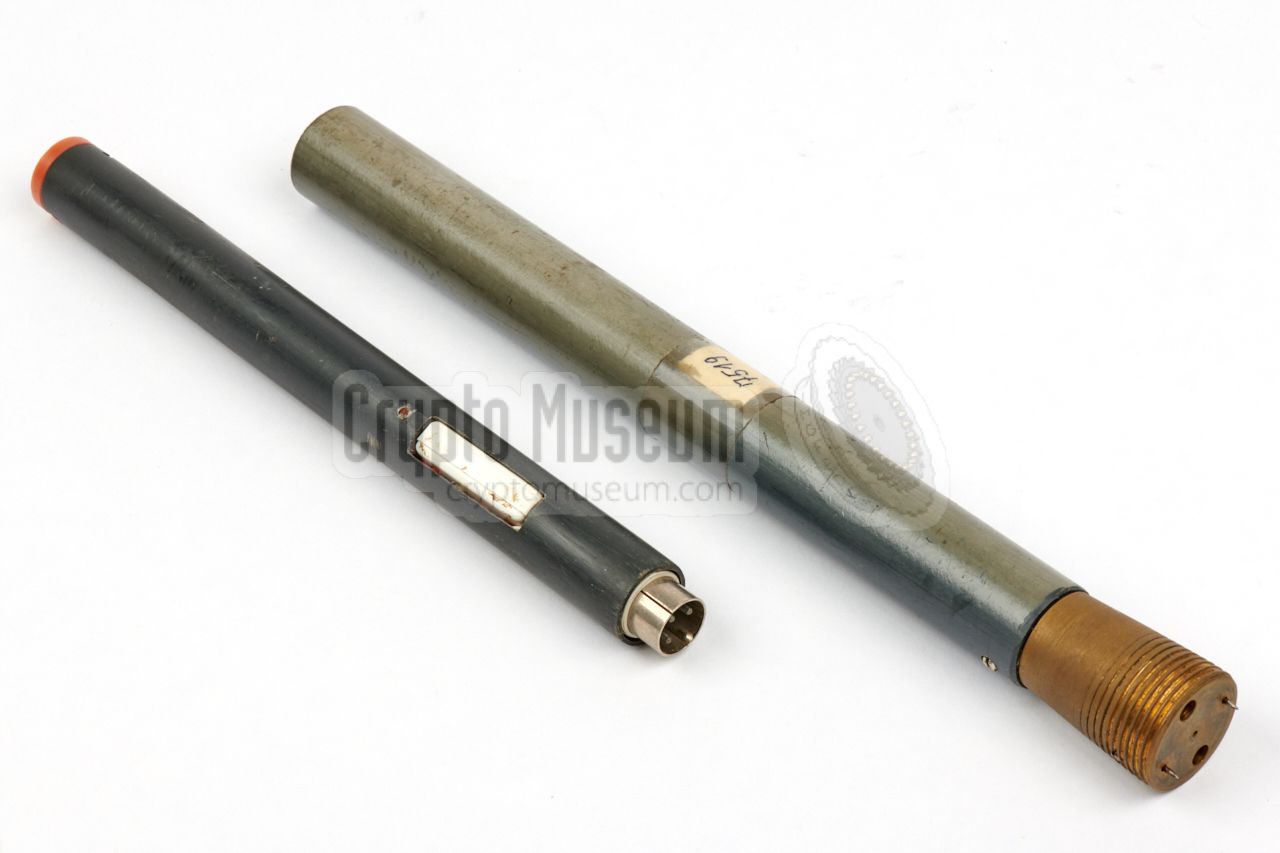
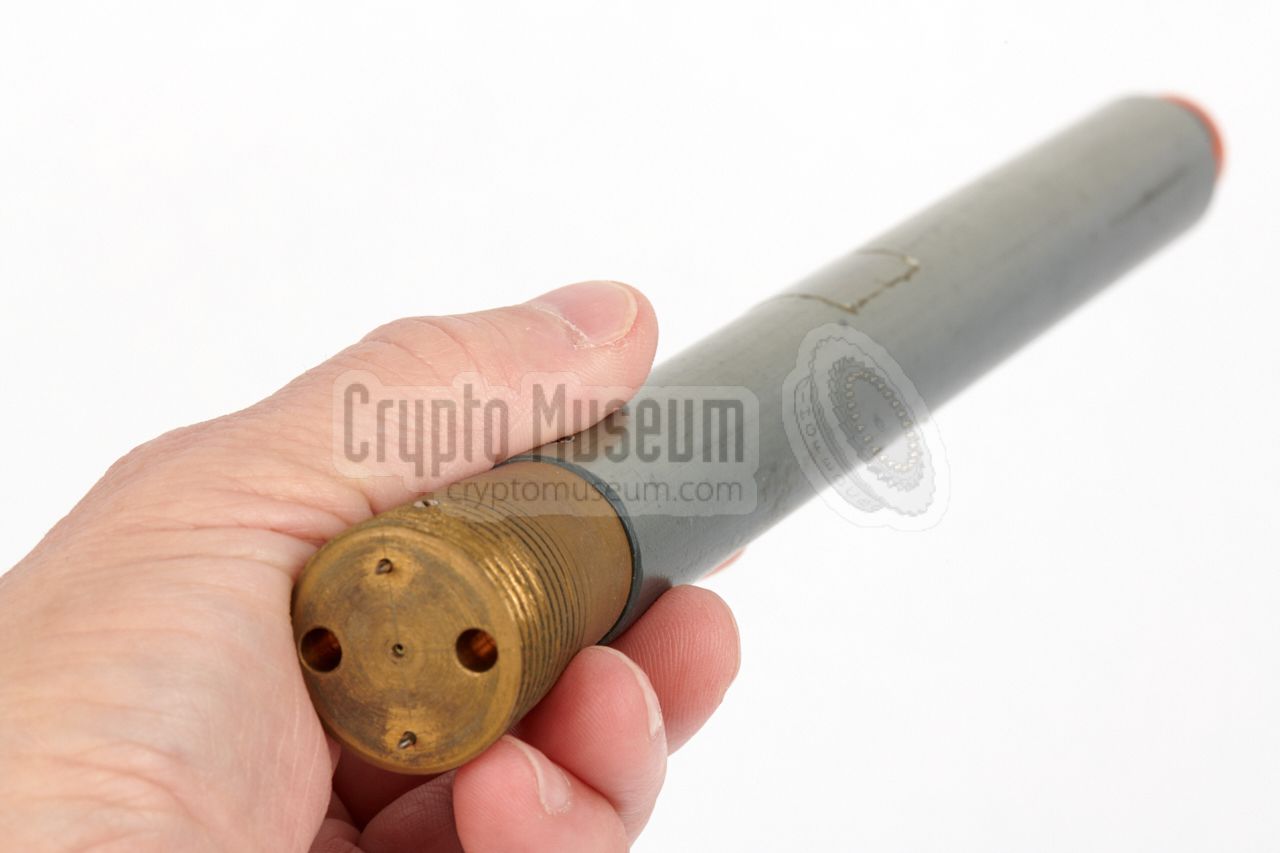
The image on the right shows the complete bug, which consists of two pieces:
a tick part – which consists of a brass weight and a grey PVC pipe – and a thin
part that is fitted inside the thick part.
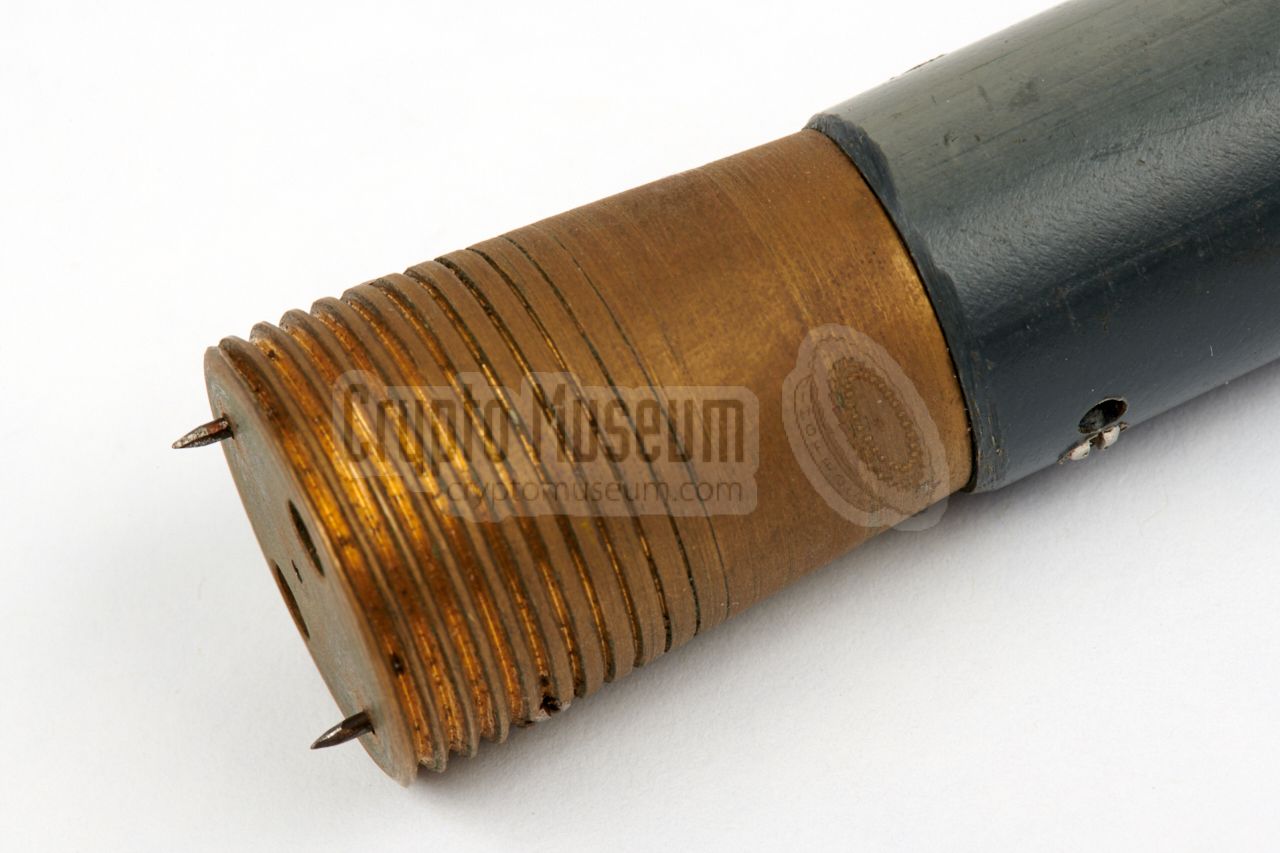
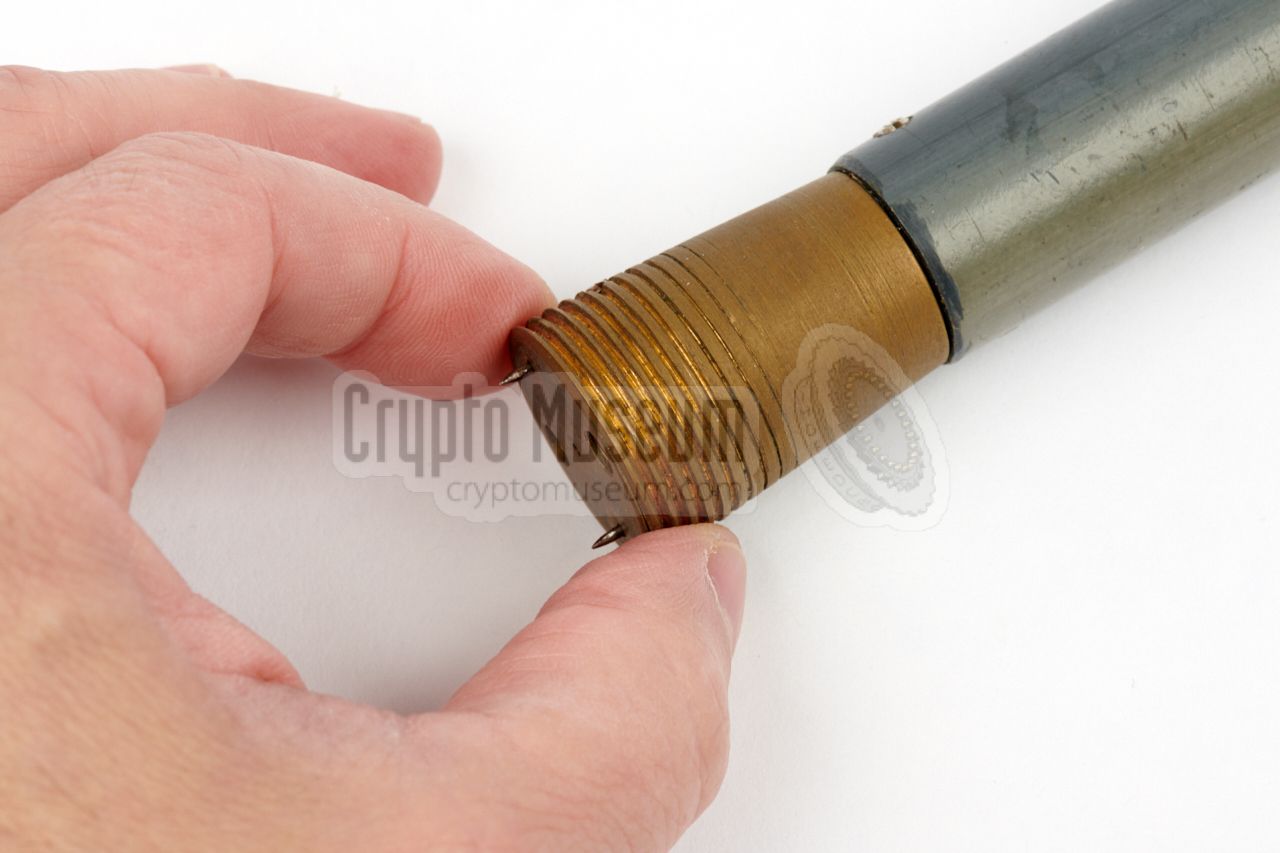
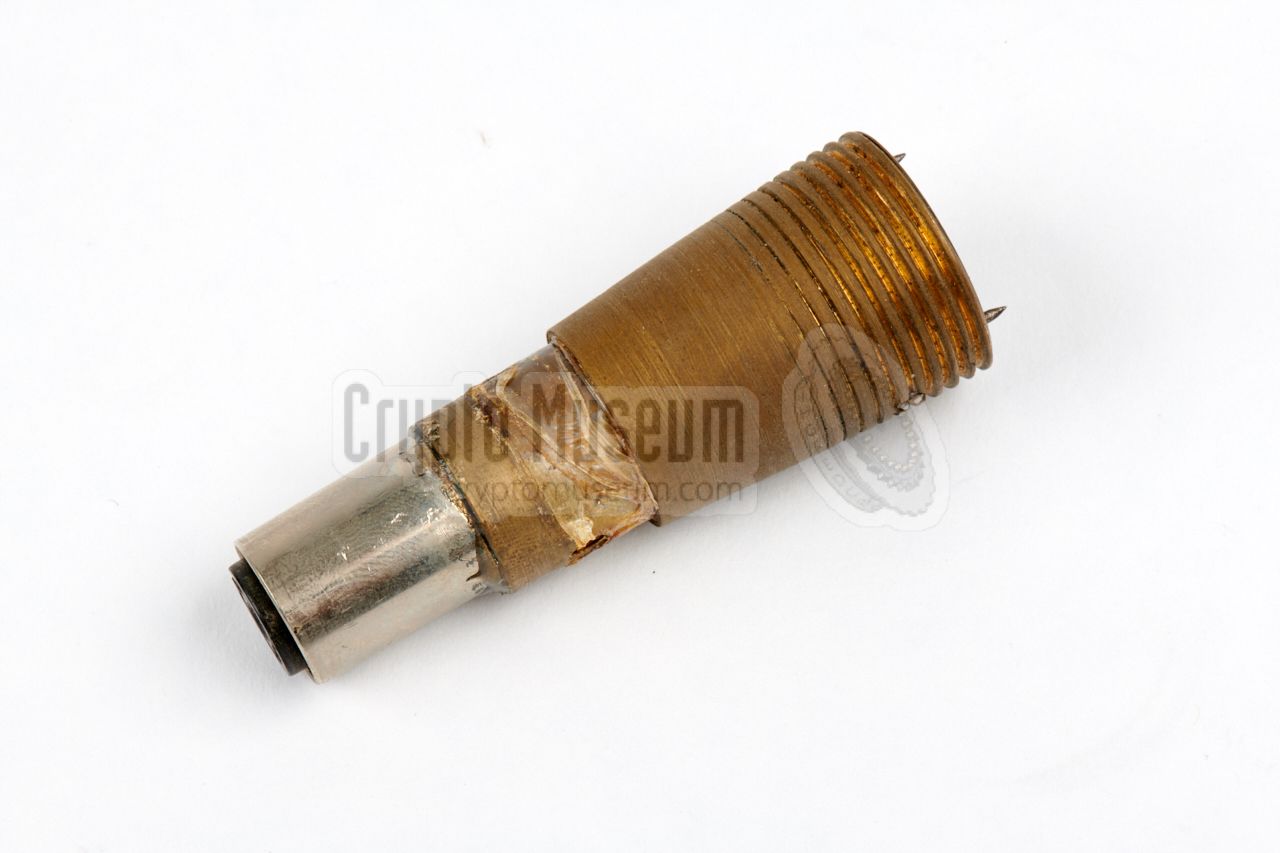
The tapered brass weight is threaded, so that it can be screwed into a
pre-drilled 25 mm hole at the bottom of the wooden framework of a door,
by means of a special tool that fits two holes.
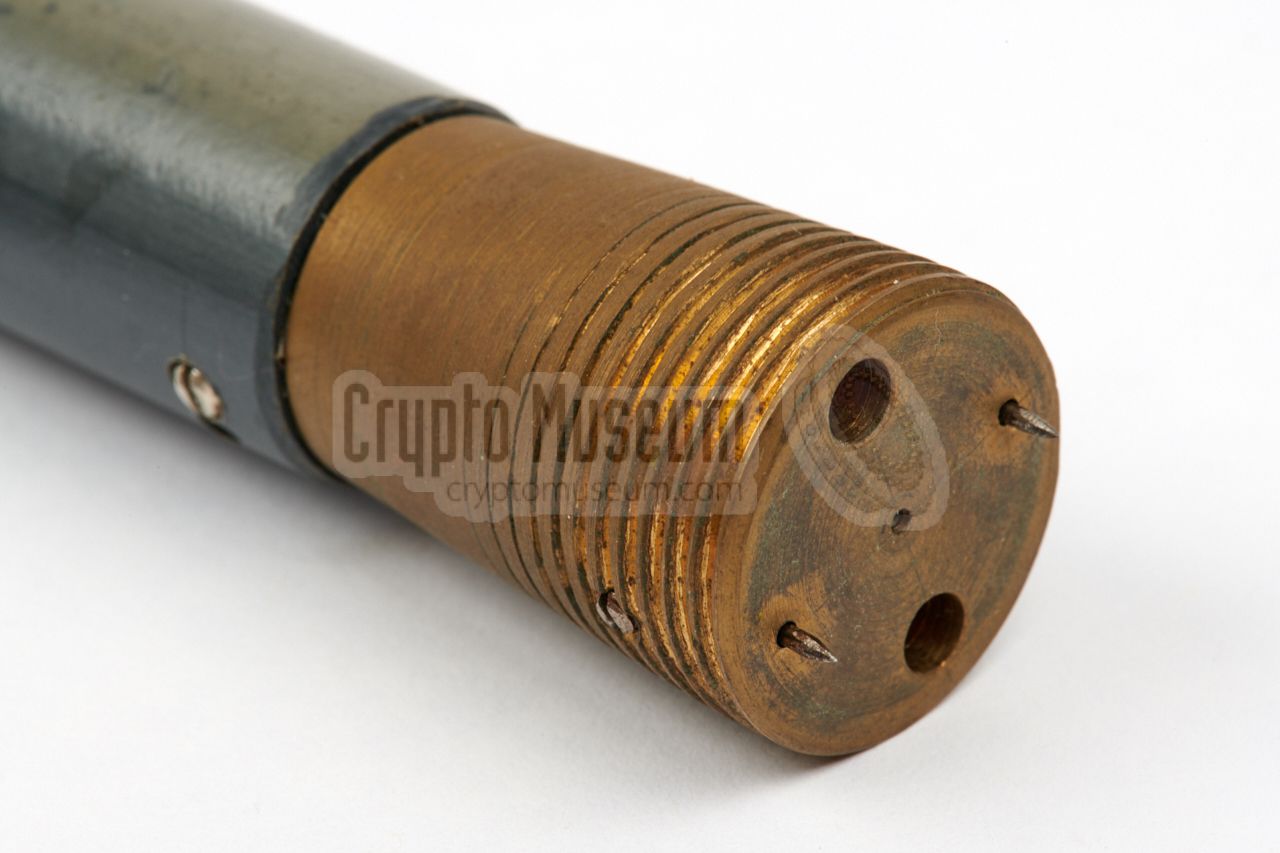
At the bottom centre is a 1 mm hole, behind which the
microphone is located. Two sharp nails – located at either side of the
microphone – allow a thin wooden disc to be fitted as a disguise [A].
|
|
|
|
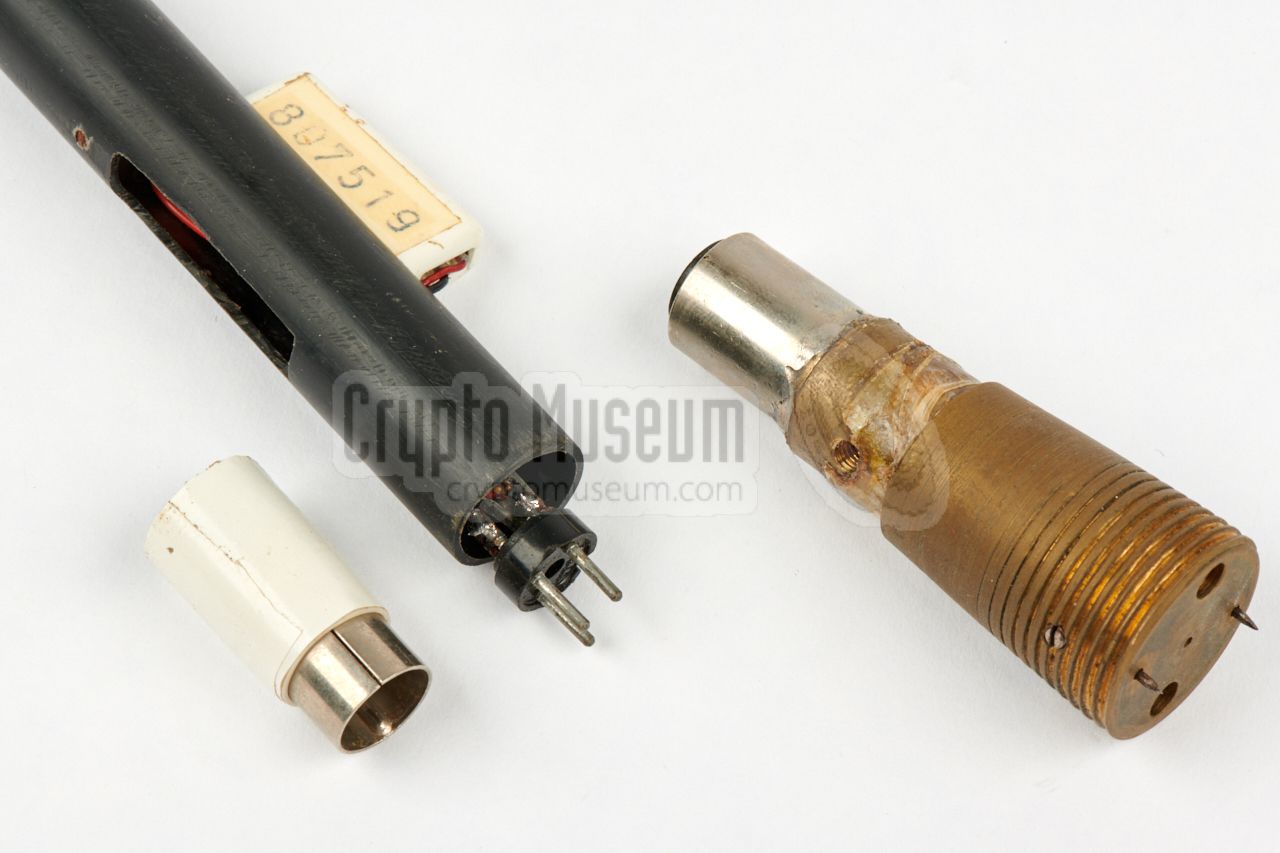
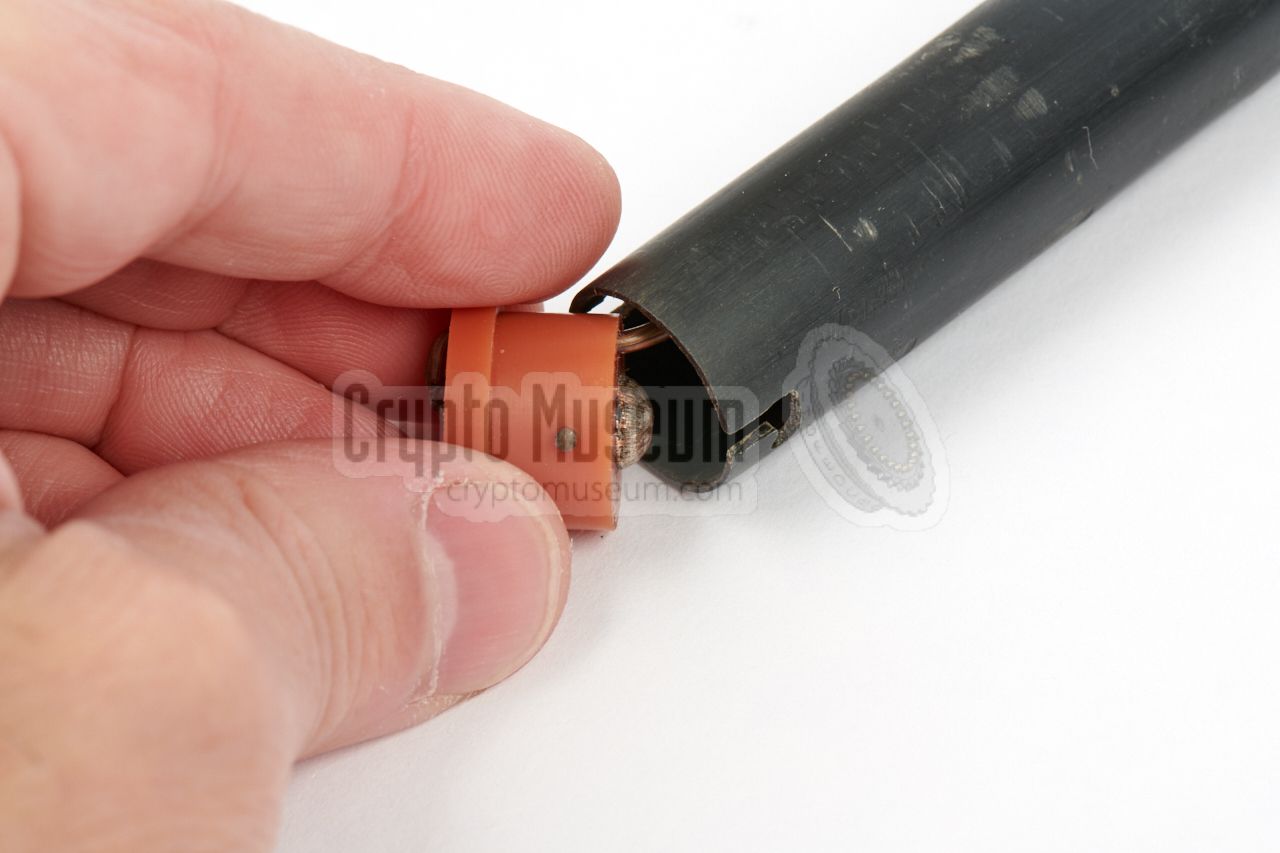
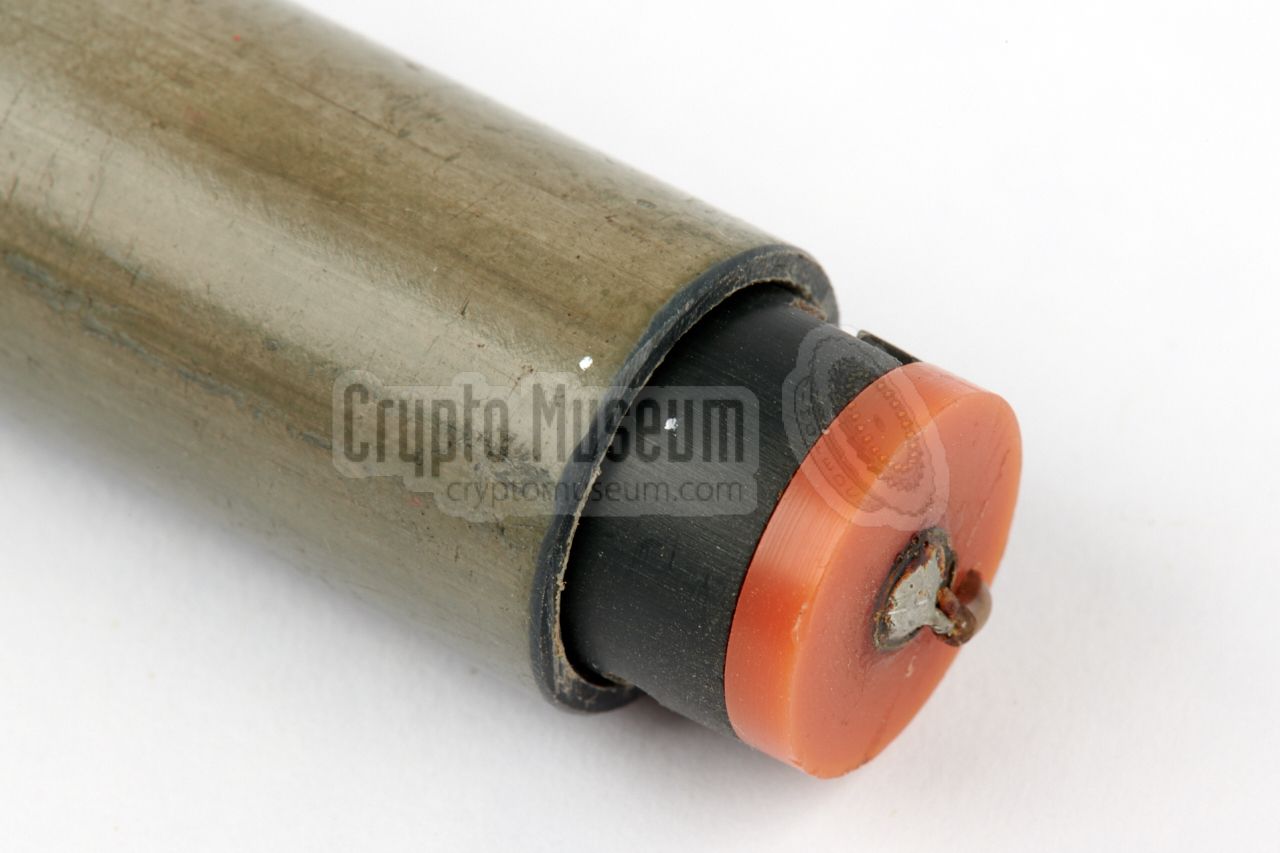
The thinner part is a black plastic stick that holds the actual
31217 transmitter
and the batteries. It also contains the wire antenna
and ensures that it is kept straight up.
This was a standard Stasi solution that was available in
several variants as shown below.
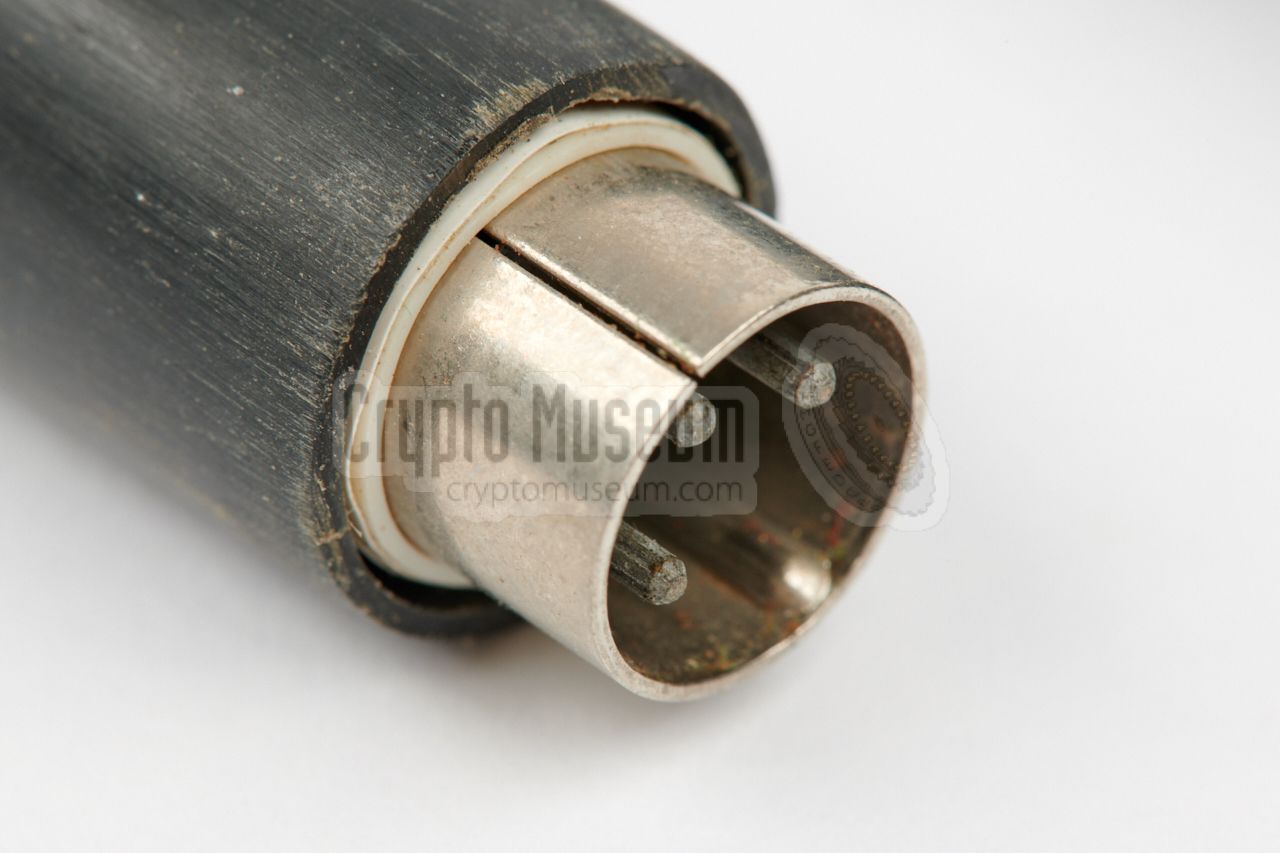
It fits snugly inside the thicker grey outer tube, and connects to
the microphone by means of a 3-pin DIN connector at the end.
|
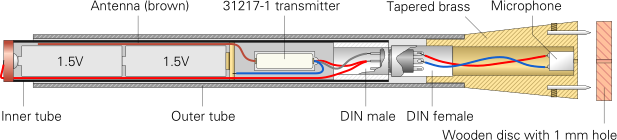
The diagram below shows the two individual parts of the bug. At the left is the
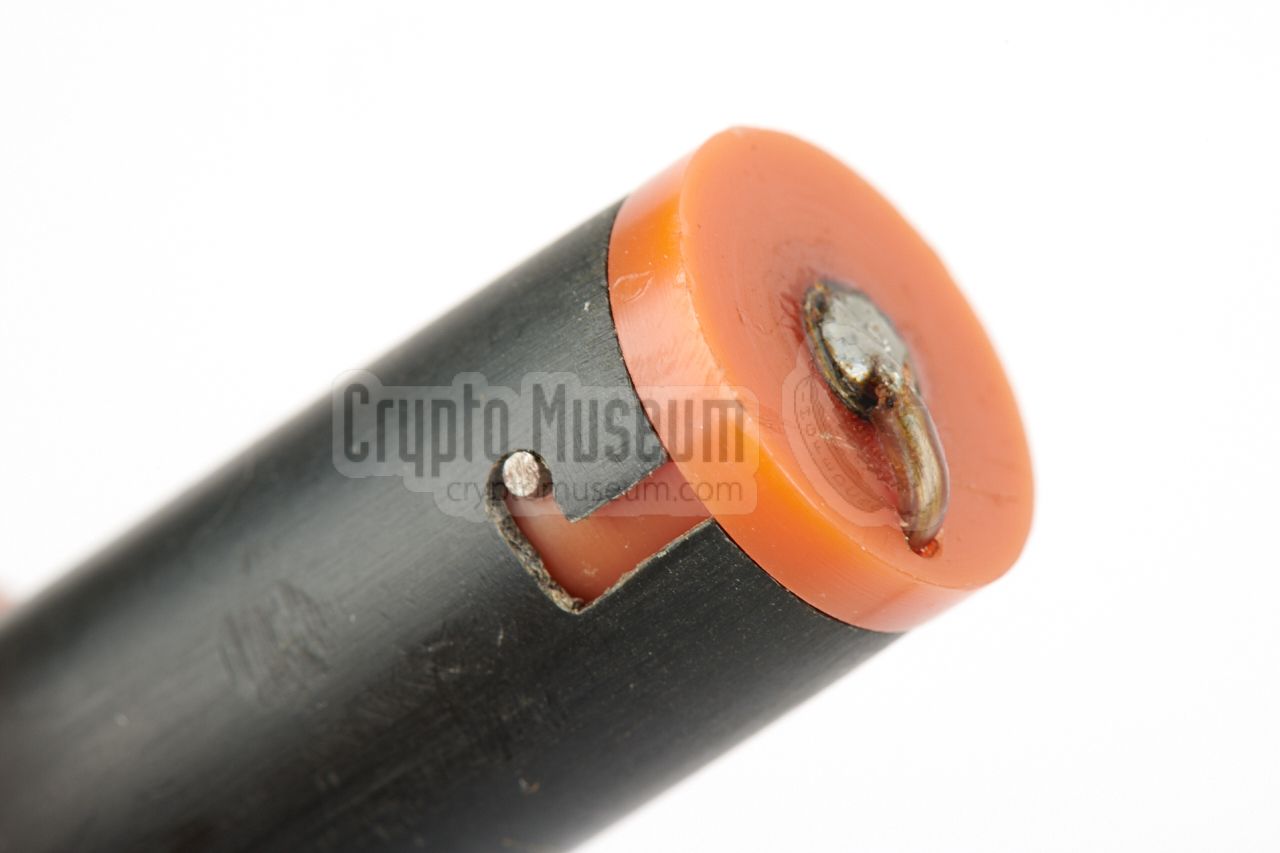
inner stick that has a diameter of 18 mm and is made of black plastic.
At the top is a red plastic cap with a bionet fitting, that gives access
to the battery compartment. It accepts two common 1.5V AA-size penlight batteries.
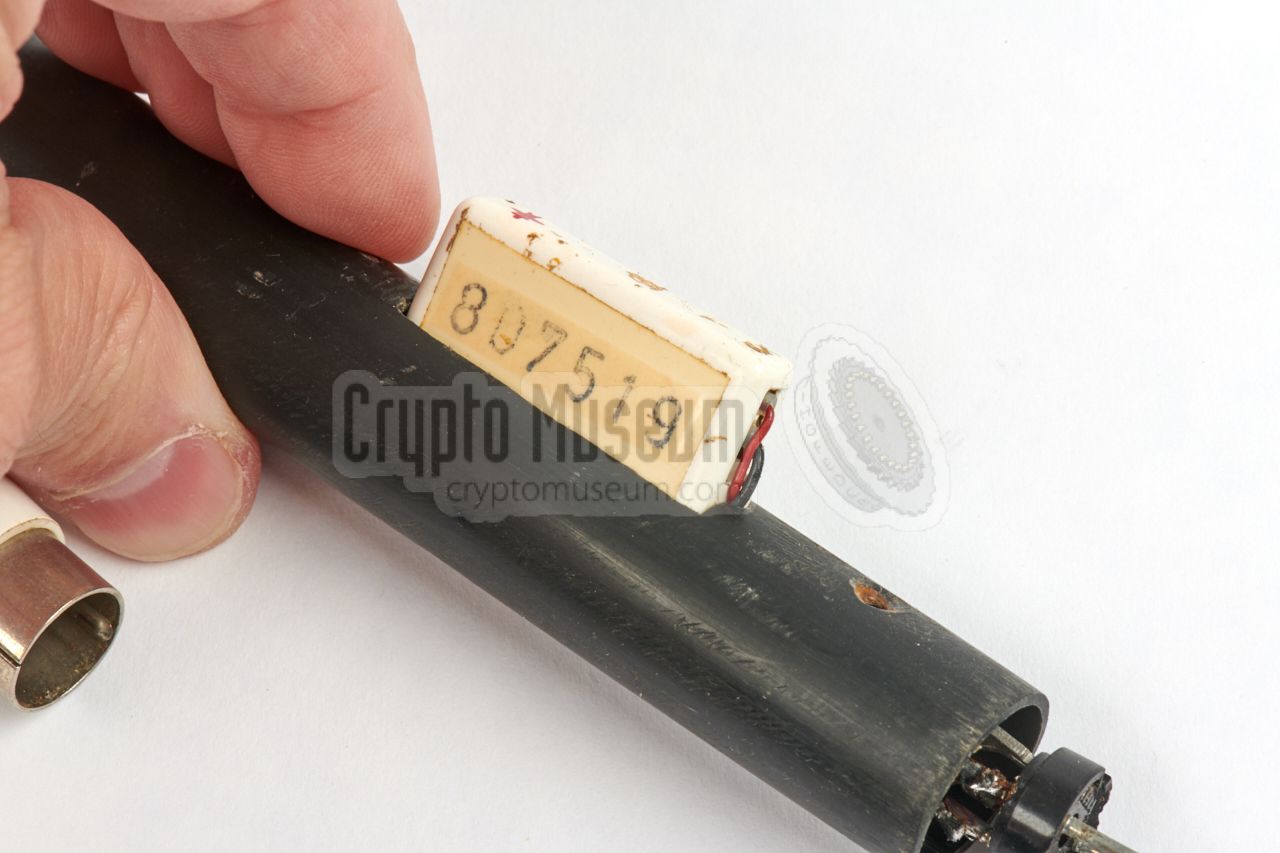
About 2/3rd from the top is the actual 31217-1 bug (white).
Its antenna is located in the battery compartment, providing an operational
range of ~ 150 metres. At the bottom is a 3-pin DIN male plug, by
which the inner stick is connected to the microphone of the outer stick.
The outer stick has a diameter of 23 mm and is made of grey PVC.
At the bottom is a heavy brass section with metric thread, allowing to
be screwed into a pre-drilled hole. At the center of the bottom is a 1 mm
hole behind which a miniature dynamic microphone is located. At the
top of the brass weight
is a 3-pin DIN socket that mates with the DIN plug at the end
of the inner stick.
|
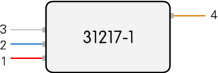
At the heart of the Holzwurm is a medium-range miniature
31217-1 transmitter,
developed in the DDR (East-Germany) in the mid-1970s at ITU,
especially for the Stasi.
It measures just 32 x 16 x 7 mm and weighs
less than 25 grams.
The device is housed in a silver-plated copper enclosure with a thin white
PVC 'jacket', and operates in Band V (940-980 MHz).
➤ More information
|
|
|
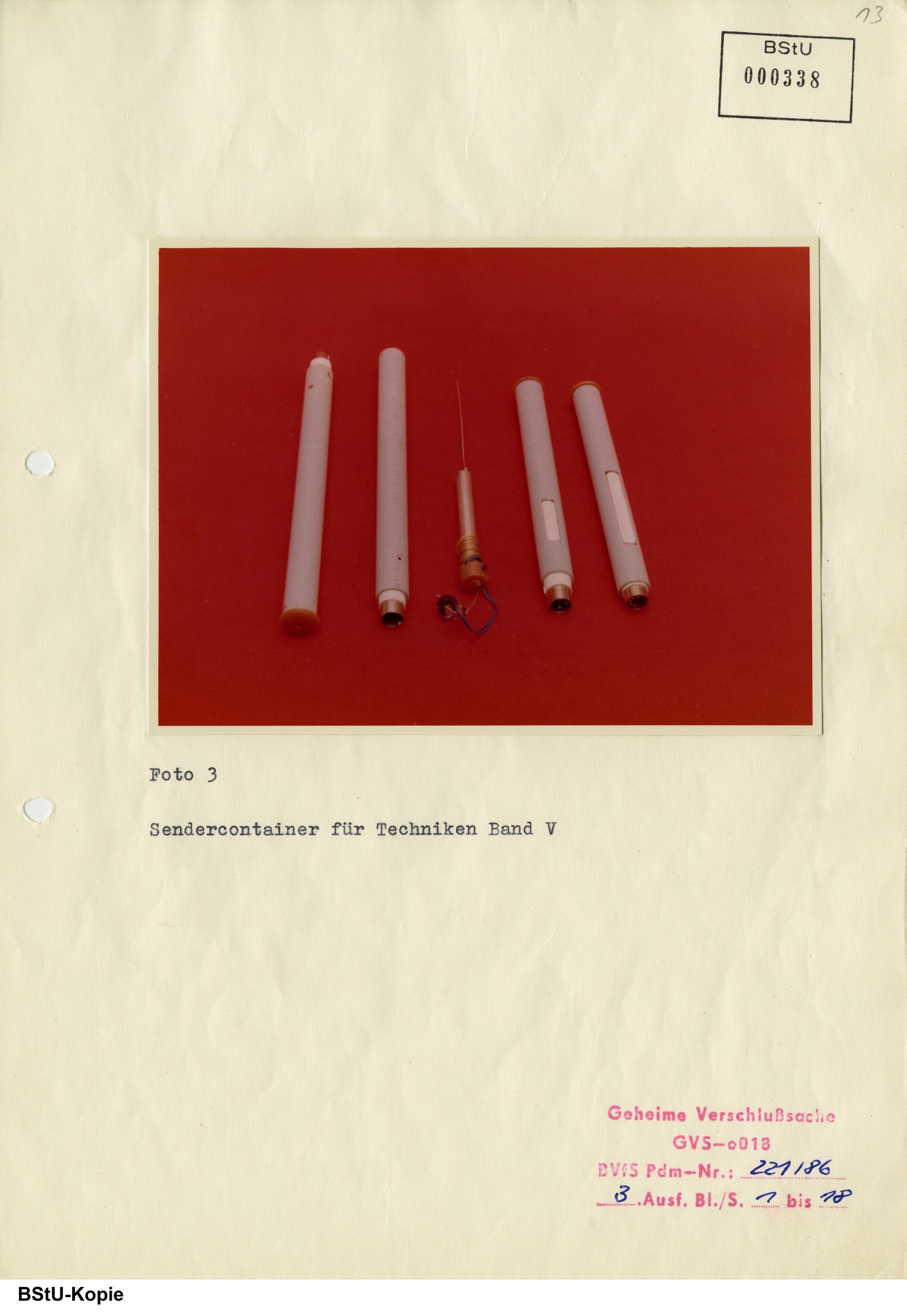
Although the outer tube of the Holzwurm bug was made
especially for building into doors, the inner tube was a more or
less standard container for the existing
31217-1 bugs
at the time, as demonstrated by the image on the right.
The image was taken from an original Stasi document in which the
technology was described that was available at the time. [3].
The second one from the right is nearly identical to the inner
tube of the Holzwurm bug.
➤ View the original page
➤ View the complete document
|
|
|
The diagram below shows a cross-section of the Holzwurm. At the left are the
batteries. At the right is the brass part with the microphone. Approximately
at the center is the 31217 transmitter
with its antenna floating in the battery compartment. To the right of the
transmitter are the 3-pin male and female DIN connectors by which the
microphone is connected to the transmitter.
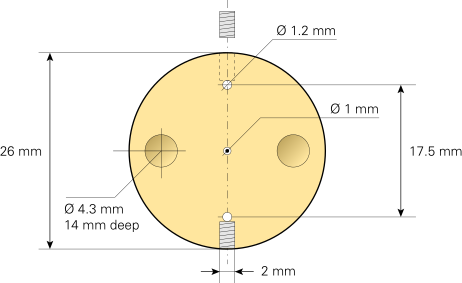
The brass part has a tapered shape that is threaded towards the bottom.
The bottom surface as a diameter of 26 mm, and has a 1 mm hole at the centre,
behind which the microphone is located.
The two nails are 17.5 mm apart and
are held in place by two 2 mm headless screws. They allow the bug to be covered
by a thin wooded disc so that it look like a wooden dowel.
The two large holes are 14 mm
deep and have a diameter of 4.3 mm, to allow the bug to be screwed into
the wooden frame of a door, by means of a special tool with two 4 mm pins,
spaced at 17.5 mm.
|
|
During the Cold War,
hotel rooms were interesting targets for
intelligence agencies
like the Stasi.
They were often used by business men, foreign agents
and dissidents, and allowed the Stasi to gather useful intelligence by
eavesdropping on the (compromising) conversations in the room.
|
It appeared that the main access door and its surrounding frame were
ideally suited for hiding bugs, not least because they often had a hollow
space inside, that provided room for the microphone, the transmitter,
the antenna and plenty of batteries that could last for up to a full year.
The image on the right shows a typical hotel room door that is on display
at the Stasi Museum in Berlin (Germany) [4]. Part of the panelling has been
removed, so that we can see the typical internal carton honeycomb structure
that gives the door its strength without making it heavy.
|
|
|
|
At the bottom of the door – here cut-off and shown at the top – a 25 mm
hole is drilled through the wooden framework (with a special tool)
deeply into the honeycomb structure of the door. In the above example, an
extra hole is drilled next to the first one, for adding additional batteries.
|
The batteries and the transmitter were then put inside the door,
after which the hole was closed with a wooden stub that
held the microphone.
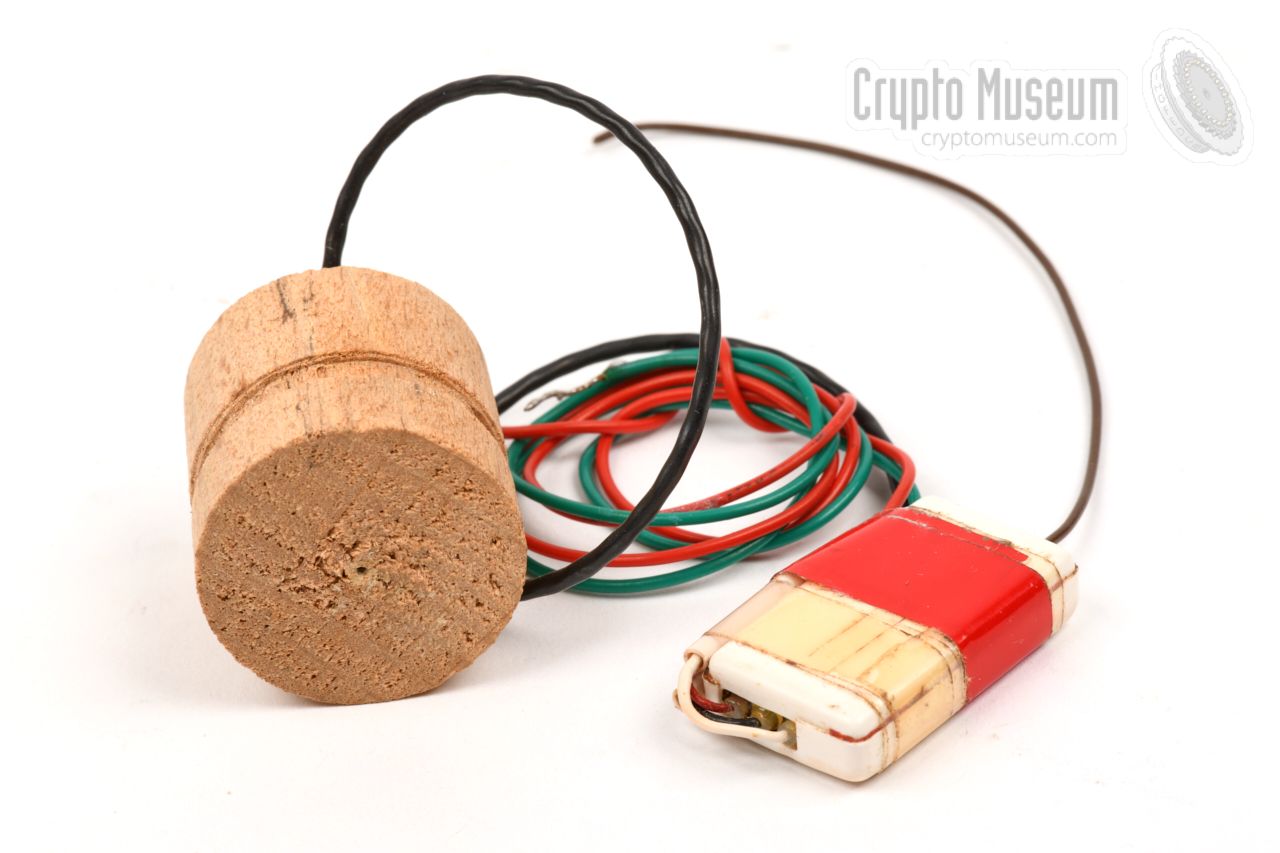
The image on the right shows a typical bug that was used by the Stasi
from the mid-1970s onwards for installing in doors. It consists
of a 31217-1 transmitter, with a
dynamic Knowles microphone
hidden inside the wooden stub.
➤ More information
|
|
|
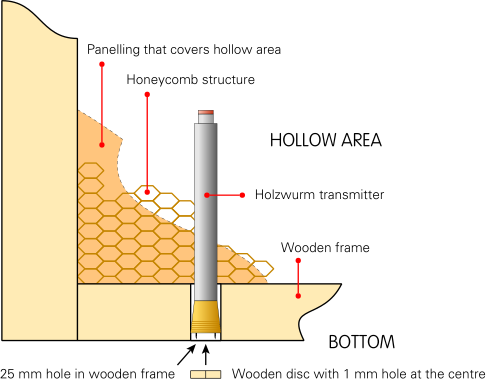
The diagram below illustrates how and where the Holzwurm was built
into the door of, say, a hotel room.
The door is first removed from its hinges, after
which a 25 mm hole is drilled into the bottom, right through the horizontal
part of the frame. The device is then screwed into this hole from the bottom —
slightly too deep — using a special tool. The excess space below the bottom
of the brass part,
is then covered with a wooden disc so that it looks like an inconspicuous dowel.
At the centre of the disc is a 1 mm hole, which allows the sound in the
room to pass the 1 mm hole in the bottom of the brass section, and reach the
microphone inside .
Note that it is also possible to build the Holzwurm into the top of the door,
which is actually easier as it doesn't require the door to be
removed, but it is discovered more easily during a visual inspection.
|
GND red +V (GND) 0V blue 0V Input grey Audio ANT brown Antenna
|
|
-
Document obtained from BStU [2]
via Detlev Vreisleben [1].
-
The year is uncertain as it is barely readable on the provided
copy of the document.
|
-
Full name: Bundesbeauftragte für die Unterlagen des Staatssicherheitsdienstes
der ehemaligen Deutschen Demokratischen Republik
(DDR) —
Federal Commissioner for the Records of the
State Security Service
of the former German Democratic Republic (GDR) —
officially abbreviated to BStU.
-
Document kindly supplied by BStU [2]
via Detlev Vreisleben [1].
|
|
|
|
Any links shown in red are currently unavailable.
If you like the information on this website, why not make a donation?
© Crypto Museum. Created: Saturday 04 August 2018. Last changed: Wednesday, 05 November 2025 - 12:40 CET.
|
 |

|
|
|







![Different versions of the sticks that were available [B].](img/mfs_stock.jpg)


![The tools that were used for building Holzwurm into a door [B]. Document kindly provided by Detlev Vreisleben [1][2].](img/holzwurm_tools_thumb.jpg "image # holzwurm_tools.jpg")
![The tools that were used for building Holzwurm into a door [B]. Document kindly provided by Detlev Vreisleben [1][2].](img/holzwurm_tools.jpg)