|
|
|
|
|

|
|
Crypto USA FILL DS-102 KYX-15 → ← KOI-18
The devices measures 130 x 63 x 35 mm and weighs 338 grams (battery included).
It can hold up to 6 TEKs in its internal memory, selectable with a rotary
switch on the control panel.
The device itself can be loaded with cryptographic keys by means of a key
management
systemr (KMS) or with a key tape loader like
the KOI-18.
Each key has a maximum length of 128 bits, of which the last 8 bits are
a checksum, 1 making it compatible with the
SAVILLE algorithm, used by
secure speech systems like
KY-57 (VINSON),
KY-99,
BID/250 (Lamberton)
and
SINCGARS radios. 2
|
|
|
The KYK-13 was also used with a range of
crypto telephones, such as the
STU-II,
Spendex 40,
Spendex 50 (DBT),
KY-68,
and Elcrovox 1/4D,
as well as with some (bulk) data encryptors like
KG-81,
KG-84
and KIV-7.
The device was first introduced in 1976 and has been in service for more
than 40 years, with an excellent track record and wide user acceptance,
largely due to its small size, low weight and ease of use.
The only real drawbacks of the device are the maximum key length of 128 bits,
and the limited number (6) of keys that can be stored inside the device.
KYK-13 was succeeded by a number of newer
key fillers,
like CYZ-10,
Secure DTD2000 System (SDS),
PYQ-10,
and more recently DTD-II,
but they all miss the simplicity of the KYK-13.
In 2009, the US Army announced the
KIK-30 RASKL
(Really Simple Key Loader) which is called
the modern KYK-13 replacement by its manufacturer [2].
Despite that, the KYK-13 was still used in 2024.
|
 |
-
There has been some debate in the past as to the maximum length of the
keys that can be stored inside the KYK-13.
In some publications
it is stated that it is only suitable for 90-bit keys and that later
devices (e.g. the CYZ-10)
had to be used for the modern 128-bit keys [1].
This can not be true however, as all crypto phones listed above use
the 128-bit key based SAVILLE algorithm.
-
Only COMSEC-enabled SINCGARS radios. For older non-COMSEC SINCGARS radios,
a separate - external - voice encryption unit
is required.
|
|
|
Compatible devices on this website
|
|
|
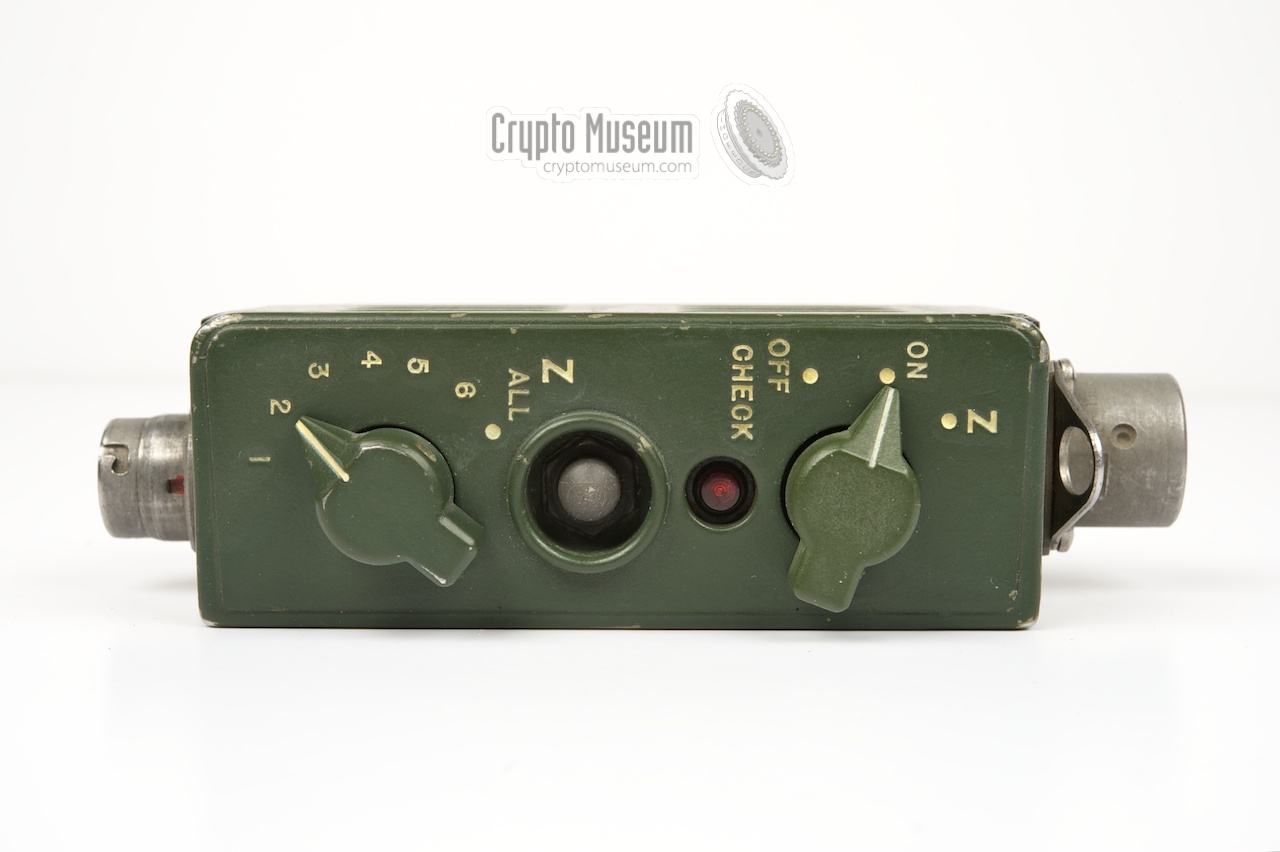
The KYK-13 is very easy to operate and has only a few controls. There are
two rotary switches (mode and address) with a recessed push button in between
them (transfer). The device has two U-229 type connectors
for connection to a crypto device: a male type (J1) and a female type (P1).
These connectors are electrically identical and can also be used for cloning
two KYK-13 devices.
At the right is the ON/OFF switch (MODE). At the left is the selector for the
required crypto key compartment (1-6). The button at the center (Transfer) is
used to initiate a transfer, although in most cases a transfer should be
initiated from the destination device (e.g. a crypto phone).
Any activity is indicated by the red LED. The
unit is ZEROIZED (i.e. all keys destroyed) by setting the key compartment
selector to Z ALL (ZEROIZE ALL)
and turning the MODE switch to Z (ZEROIZE).
|
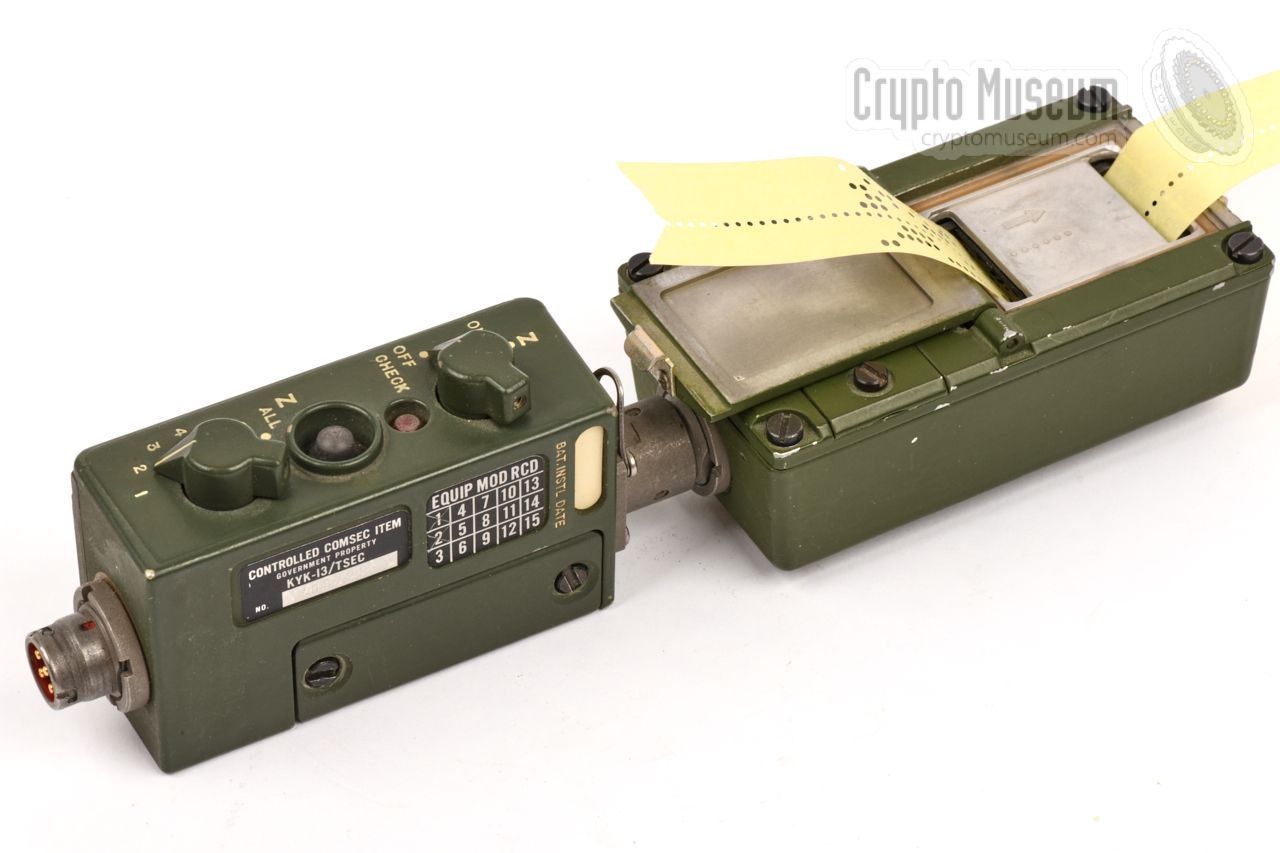
The KYK-13 is powered by a single internal 6.5V battery that is installed
in a small compartment at the rear of the unit. A small aluminium panel with
two screws gives access to the battery and allows it to
be replaced within minutes. The image on the right shows the KYK-13 after
the battery cover has been removed.
Initially, the KYK-13 was used with the Mercury-based
BA-1372/U battery, which has now been superseded by the better
BA-5372/U Lithium Manganese Dioxide battery.
This battery is still available today from a variety of sources.
|
|
|
|
The design of the KYK-13 is similar to the
MX-18290 Transmission Security
Key Fill Device, featuring a similar case, similar controls and identical
connectors. The KYK-13 however, is much smaller and can be used for
cryptographic keys, whilst the
MX-18290 is only suitable for transferring
Frequency Hopping tables, also known as Transmission Security Keys (TSK).
|
The KYK-13 is used all over the world with a variety of devices,
ranging from crypto phones and similar equipment,
to frequency hopping radios (FH), airplane transponders
(Identification Friend or Foe, or IFF) and even GPS devices.
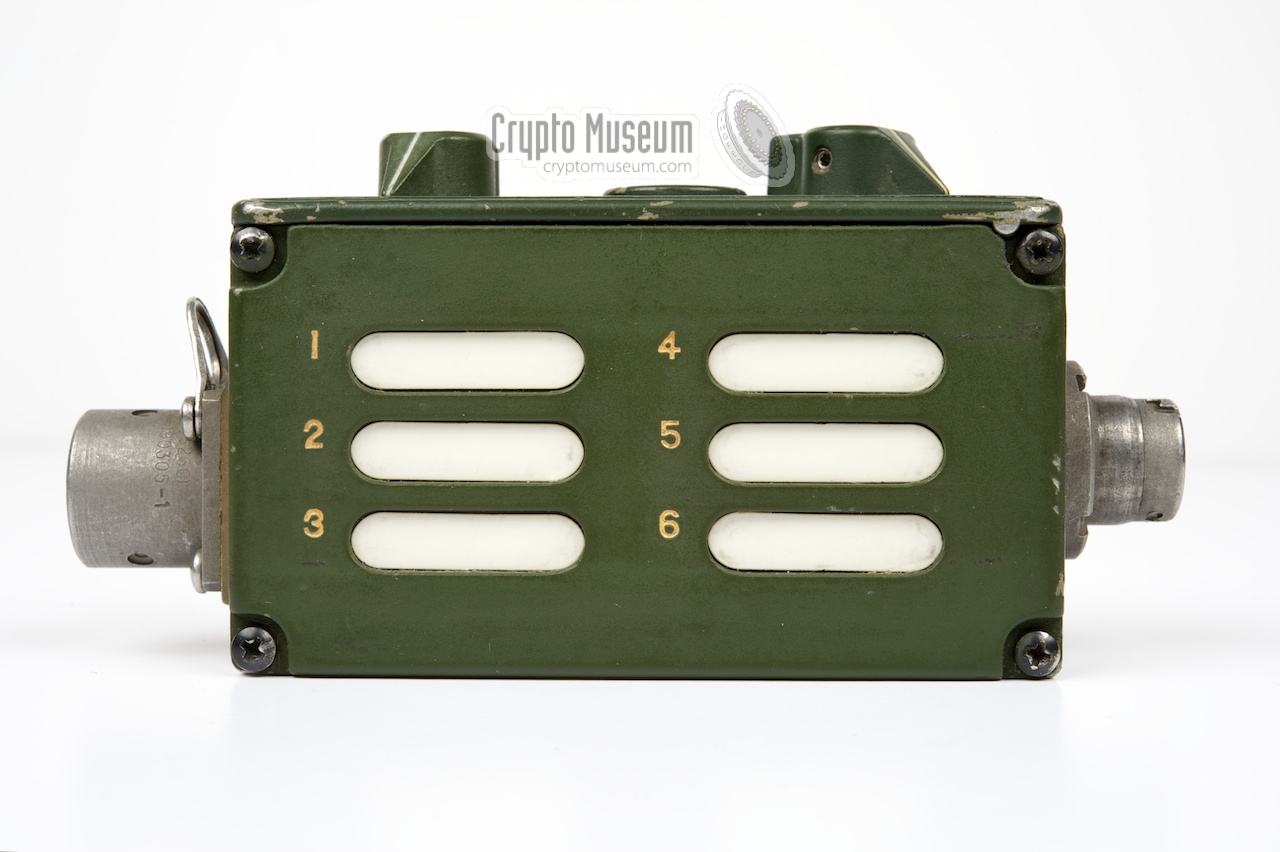
The KYK-13 can hold up to six keys (or key variables) in its memory,
with a maximum of 128 bits for each key. Each key consists of 120 key bits
(i.e. the actual key) and an 8-bit checksum. As there is no way to tell
which key is used for what purpose, there are 6 writable fields on the
side panel of the device, as shown in the image.
|
|
|
|
The six white ovals in the image above are somewhat recessed and have
a plastic background, so that they can be written with a pencil.
As per convention, they would generally be used to indicate the type of
key and the valid crypto period. For example, if compartment #1 contains
a Secure Voice key that is valid until 24 February,
oval #1 could read something like: SV 24 Feb.
|
|
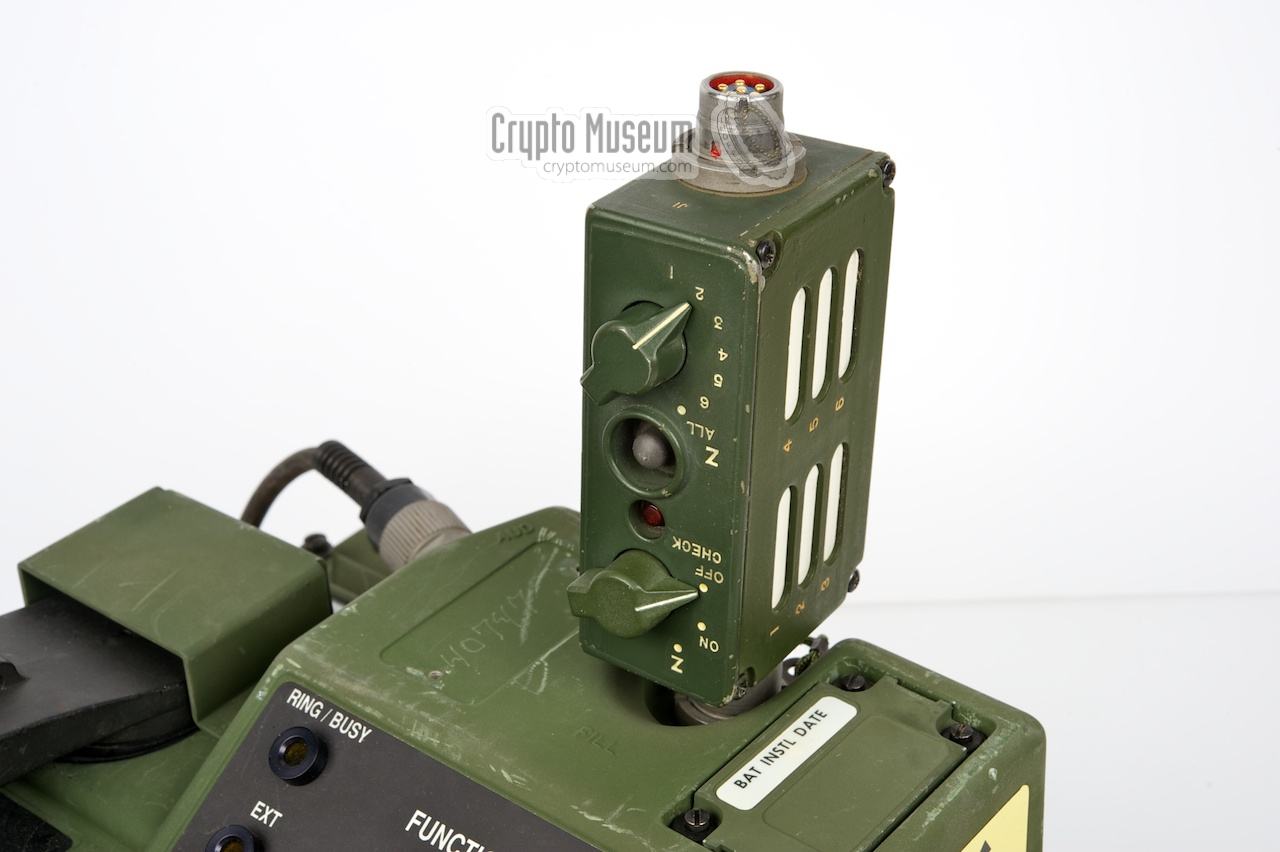
Although the KYK-13 can be connected to any DS-102 compatible device by
means of a so-called fill cable, it is constructed in such a way that it
can be fitted directly to the FILL connector of most crypto devices.
As it has both a male-type and a female-type connector, one will always fit.
|
|
|
KY-68
|
|
|
Just as an example, the KYK-13 is shown here on top of the
KY-68 military crypto phone that was used in the US Army during the
1990s. It is connected directly to the FILL connector of the
KY-68, and was used for transferring various types of keys.
➤ More about the KY-68
|
|
|
|
|
Spendex 40
|
|
|
The KYK-13 was also a popular device outside the US Army.
The image on the right shows a KYK-13 unit connected to a Philips
Spendex-40 military-grade crypto phone.
It is used here to load the Traffic Encryption Keys (TEK) into the
secure telephone.
➤ More about Spendex 40
|
|
|
|
Over the years, the KYK-13 has arguably become one of the most popular fill
devices of all times, because of its small size, light weight and ease of use.
In fact it was so popular that it was always in short supply.
It has become the standard by which all later key fillers
are referenced.
|
|
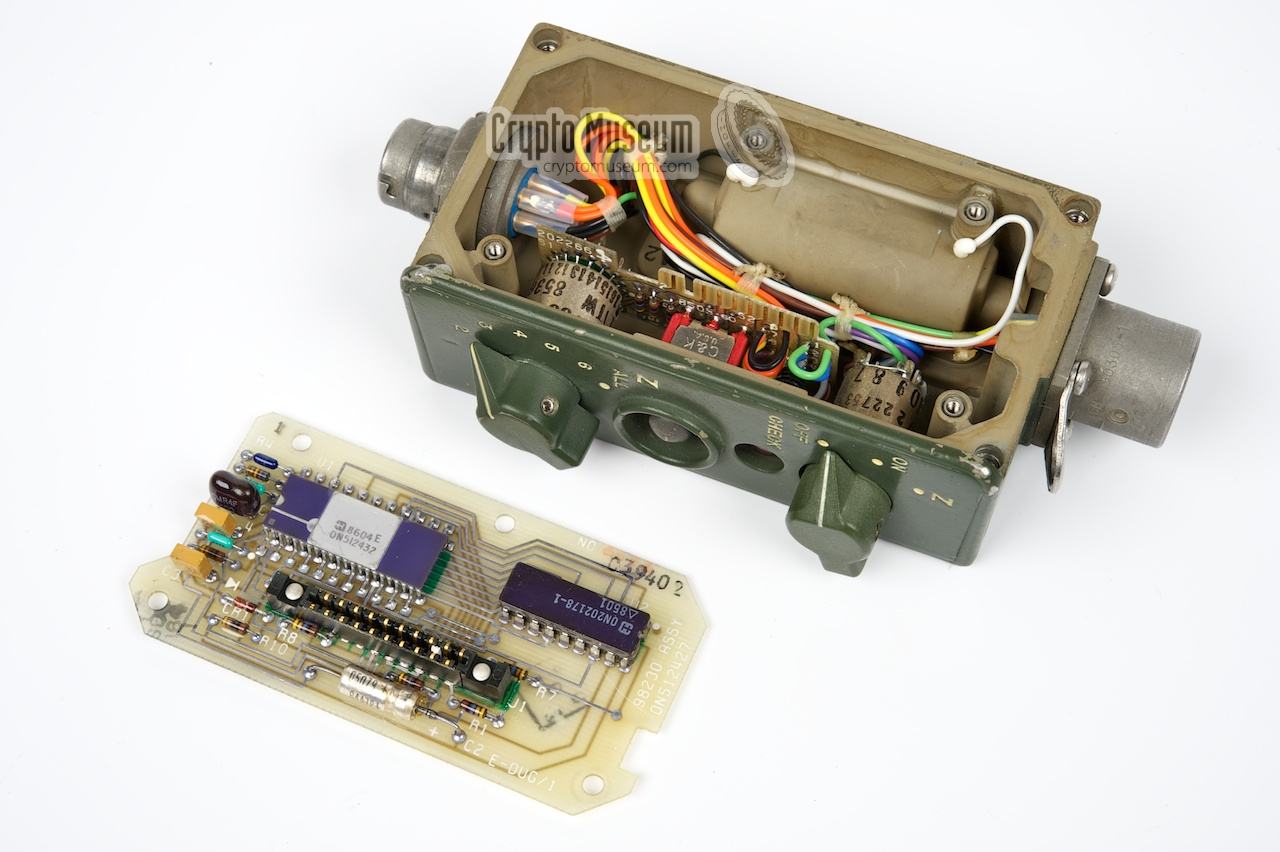
The KYK-13 is a powerful yet rather simple device. It could be serviced
at the depot and can be opened by removing the four bolts at the corners
of the front panel. After removing the front
panel, the interior becomes visible,
revealing the solder side of the main
Printed Circuit Board.
|
The Printed Circuit Board (PCB) is held in place by four small cross-head
bolts and contains a connector (at the other side) that slots directly
into another PCB that contains the controls.
After removing the bolts, the PCB and easily be lifted off the lower PCB.
The image on the rights shows the main PCB aside the KYK-13, with its
component side facing upwards.
The double-sided PCB is relatively simple
and contains only a handful of components. At the lower half is the
black sockets for the lower PCB.
|
|
|
The rest of the PCB contains only two critical components:
the main controller (ON512432)
and a static RAM memory chip (ON202178).
Both chips are custom made (OEM) by Harris. The main controller is
probably a custom-designed Application Specific Integrated Circuit
or ASIC. Judging from the date codes on both chips, the device
shown here was made in or around 1986.
Please note that neither the KYK-13 nor its documentation is classified
or otherwise restricted. Only when the device is loaded with a valid
key, it becomes classified to the level of the key. KYK-13 is approved
by the NSA for the distribution of Type-1 cryptographic keys.
|
Because of its success and popularity,
the KYK-13 was always in short supply, which promted several European
manufacturers to come up with an alternative.
One example is the KSP-1 of the German manufacturer ANT, shown here.
The device is fully compatible with the KYK-13
but has 32 key compartments rather than just 6.
It is operated with three push-buttons and has a 3-digit LCD readout.
➤ More information
|
|
|
Another example is the UP-2001,
shown in the image on the right,
made by Philips Usfa
in The Netherlands in 1990. It resembles the
KYK-13 but has 40 key compartments. Instead of the second
U229 connector
is has a 9-pin RS-232 socket for the connection of a
barcode reader.
➤ More information
|
|
|
|
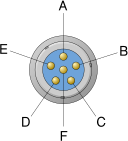
At either end of the KYK-13 is a 6-pin U-229 connector. One is of
the plug-type (U-283/U) and the other one is of the socket-type (GC-729).
Both receptacles are connected in parallel.
The female receptacle can be fitted directly to most crypto devices,
but it is advised to always use the male receptacle in combination with
a fill cable. Below is the pinout of the male connector, when looking
into the receptacle.
|
GND Ground SWG Switched ground (via MODE-selector) REQ Fill request DATA Fill data into KY-99 CLK Fill clock into KY-99 - unused
|
|
|
|
|
Any links shown in red are currently unavailable.
If you like the information on this website, why not make a donation?
© Crypto Museum. Created: Thursday 31 May 2012. Last changed: Wednesday, 05 November 2025 - 12:57 CET.
|
|

|
|
|