|
|
|
|
|

|
|
← TSCM
TSCM equipment
F.G. Mason Engineering Inc.
was an American manufacturer of
technical surveillance and countermeasures equipment (TSCM),
known for its fine range of bug-finding receivers.
The company was founded on 20 November 1961 by Francis (Frank) G. Mason,
who also developed all equipment during the founding years.
The company was dissolved in the early 1990s after a
bribe scandal.
Mason developed a range of TSCM equipment
and was for more than 30 years one of the most respected
key suppliers of TSCM equipment to law enforcement agencies all over the world.
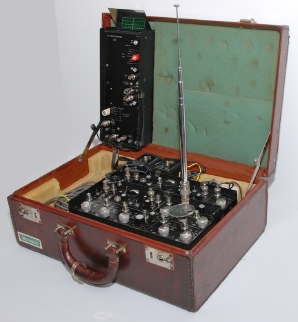
The range consisted of suitcase receivers, such as the
A-2 and
A-3, and portable receivers,
like the MPR-1
and the MPR-5.
The range of receivers was complemented by the PACMR-1;
a three-piece programmable audio receiver that is sometimes referred
to as the predecessor of the popular
REI OSCOR range
that was introduced in the 1990s.
Apart from TSCM receivers, Mason also developed a range of telephone analyzers,
such as the TT-4
and TT-6, that were used by governments to check (analogue)
telephone lines for bugs and wire tapping.
All equipment was hand-build at the Mason facilities in Fairfield
(Connecticut, USA) by some 60 employees, and most equipment was
developed by company owner Mason himself.
➤ History of Mason Engineering Inc.
|
|
|
Mason equipment on this website
|
|
|
The A-2 was the first publicly available modular TSCM bug detector,
developed by Frank Mason around 1964. Based on the A-1,
which was built exclusively for the US Army, the A-2 was able to find
radio bugs in the 2 kHz to 2 GHz range.
Visually, it is one of the most attractive receivers of the Mason TSCM
family. The receiver is stored inside a leather suitcase, together with all
of the accessories and plug-in units.
➤ More information
|
|
|
|
|
Integrated receiver A-2CS
|
|
|
The A-2CS is functionally identical to the A-2,
but rather than supplying a series
of separate plug-in modules and accessories, all relevant components have been
combined in an all-in-one solution or system.
Instead of using patch cables to select the required frequency range,
a built-in selector switch is used.
➤ More information
|
|
|
|
|
Semi-portable receiver A-3B
|
|
|
In 1968, Mason started the development of the successor to the A2-series,
the Portable Receiver A-3, which was introduced in 1971.
The A-3 can be considered an improved version of the A-2.
The scope is mounted in the lid of the case and can be viewed through
a mirror. The unit shown here is the later A-3B.
The A-3 receiver was very popular with security agencies world-wide.
It's use by the US government was confirmed in 2008 [5].
➤ More information
|
|
|
|
|
Integrated receiver A-3CS
wanted
|
|
|
In the early 1970s, an improved version of the self-contained
A-2CS receiver was introduced. It was housed in a similar case,
but contained a number of important improvements over its predecessor.
All plug-in units are permanently built-in and wired.
Some versions of the A-3CS can use the later MPR handheld receivers
as input, allowing subcarrier signals to be demodulated.
➤ More information
|
|
|
|
|
Mini Probe Receiver MPR-1
|
|
|
The MPR-1 was developed around 1980. It's a small modular design
that can be enhanced at will. The basic unit consists of the Mini
Probe Receiver itself (MPR) and a tiny green phosphor display
bolted onto it.
In all, 12 different plug-in frequency modules were available,
spanning a very wide frequency range from 20 kHz
to 10 GHz (!)
➤ More information
|
|
|
|
|
Mini Probe Receiver MPR-5
|
|
|
The MPR-5 was the last member of the Mason family, developed in the 1990s,
just before Mason had to close their doors.
It resembles its predecessor, the MPR-1, but contains a number of
improvements.
Like the MPR-1, it was usually supplied in an unobtrusive briefcase.
The MPR-5 is still used widely today.
➤ More information
|
|
|
PACMR-1 was a programmable audio countermeasures receiver,
developed in the late 1980s and mainly used by US law enforcement
and intelligence agencies.
The large 3-piece system can be seen as the predecessor of the popular
REI OSCOR range that has dominated the TSCM market throughout the
1900s and 2000s.
We are currently awaiting additional information on the PACMR-1,
which will eventually become available on this page.
➤ Sneak preview
|
|
|
|
Below is a list of known equipment from the Mason product line.
We have no idea whether this list is complete, but if you happen to
know an item that is not listed below, please contact us.
|
-
So far, we haven't received any reports from someone who has actually seen
the Mason A1, which appears to have been made especially for the US Army [6].
-
The MPR-4 was probably never released as an official product. Only prototypes
have been reported, such as the one with serial number 4 that was offered
on eBay in December 2001 [6].
|
|
|
|
Any links shown in red are currently unavailable.
If you like the information on this website, why not make a donation?
© Crypto Museum. Created: Friday 14 August 2009. Last changed: Saturday, 11 November 2017 - 13:06 CET.
|
 |

|
|
|