|
|
|
|
|

|
Frequency alignment tool
Adjusting the speed, and hence the data rate (baudrate) of a
teletypewriter,
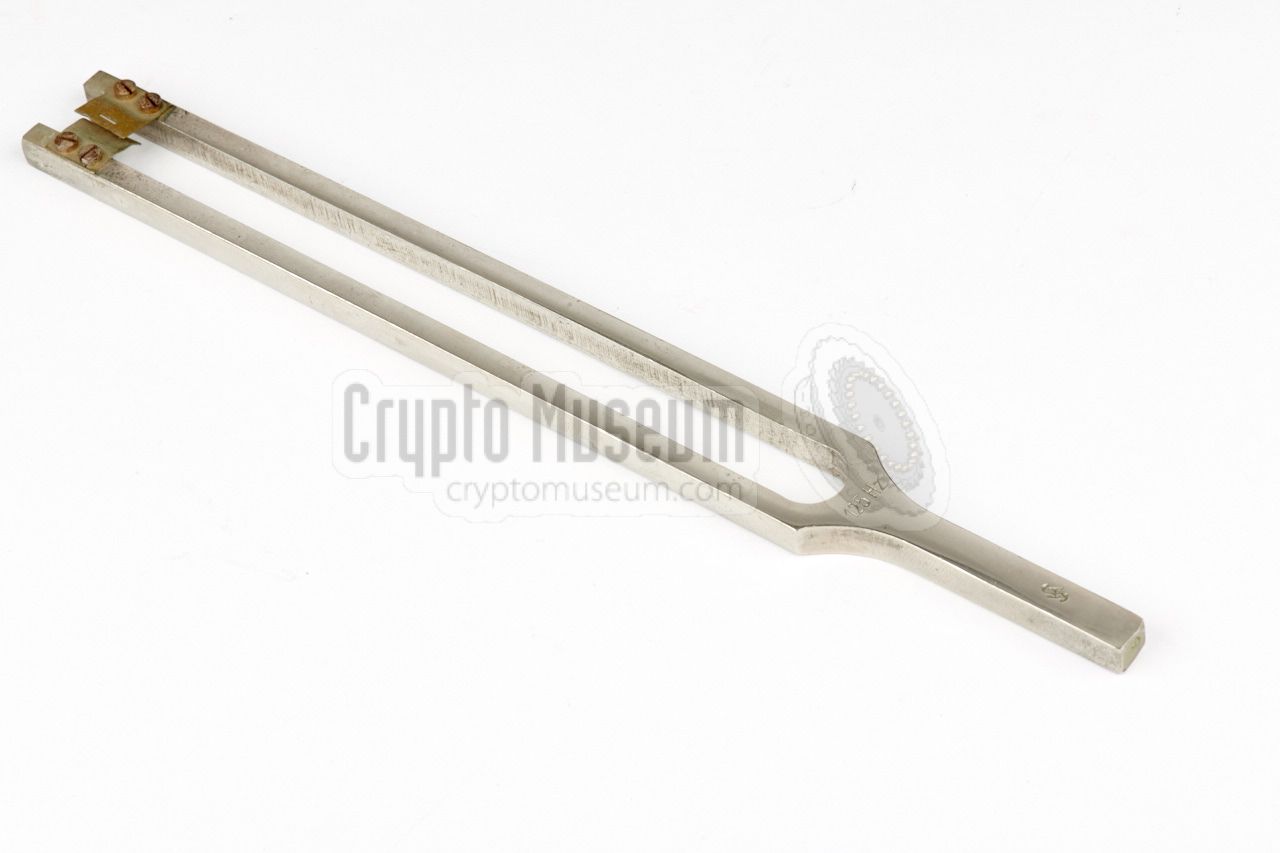
was commonly done with the help of a tuning fork that was often supplied
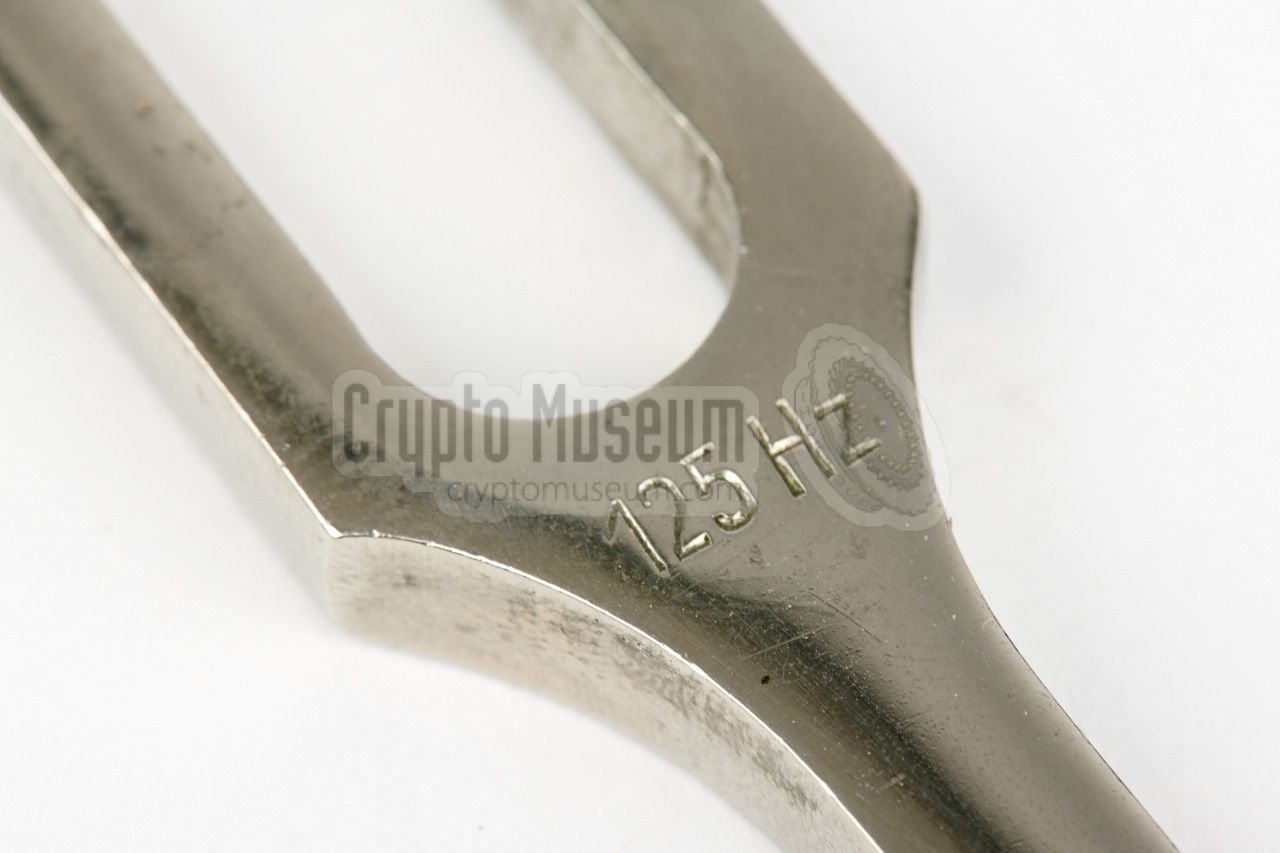
with the machine. It is resonant at a fixed frequency — commonly 125 Hz —
but other frequencies are known to have been used as well.
|
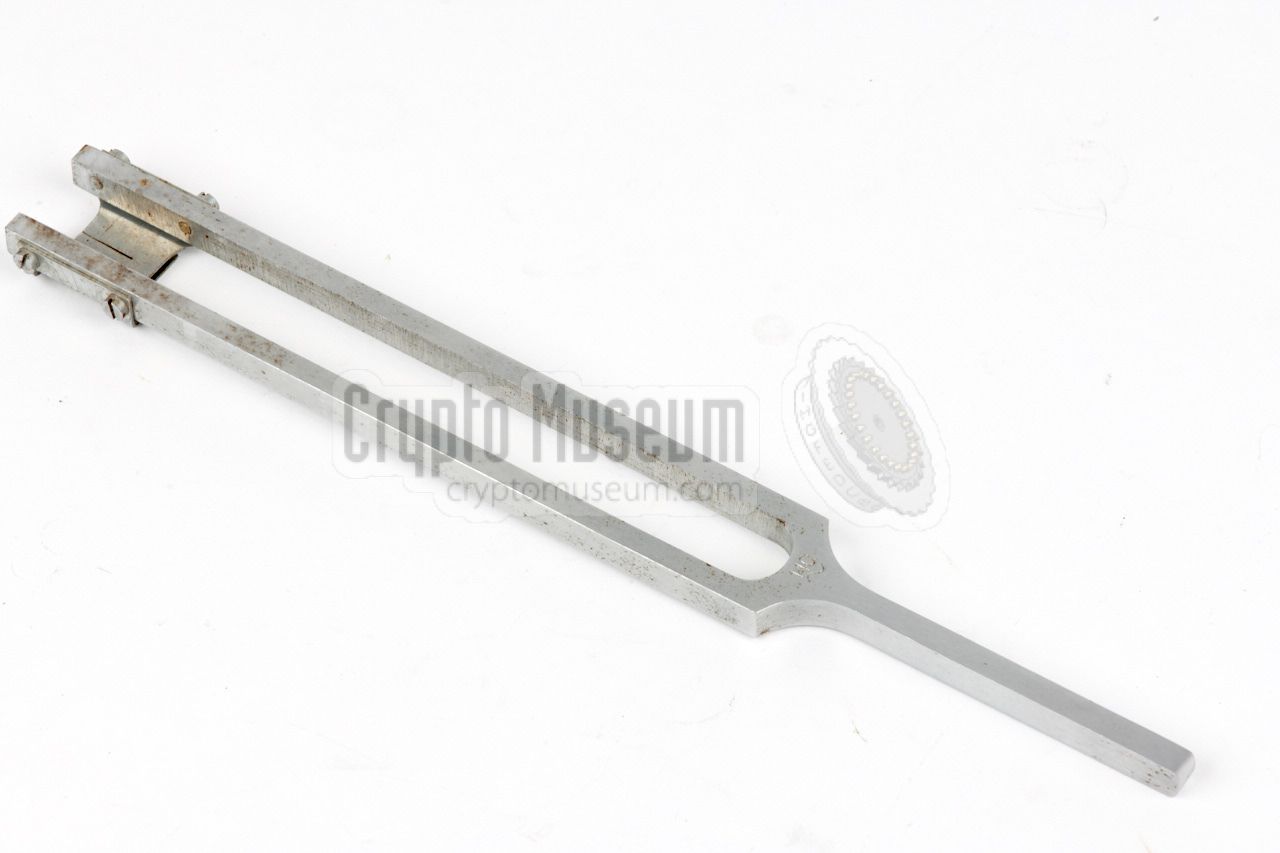
A tuning fork [1] is an acoustic resonator in the form of a two-pronged fork,
with the prongs (tines) forming a U-shaped bar of elastic metal. When excited,
it resonates at a specific constant pitch which is subject to the length
and mass of the two prongs. It is often used as a standard of pitch
(frequency) for tuning musical instruments.
When adjusting the speed of a rotating object, such as a motor axle or –
as in this case – a teletypewriter, a modified form of a
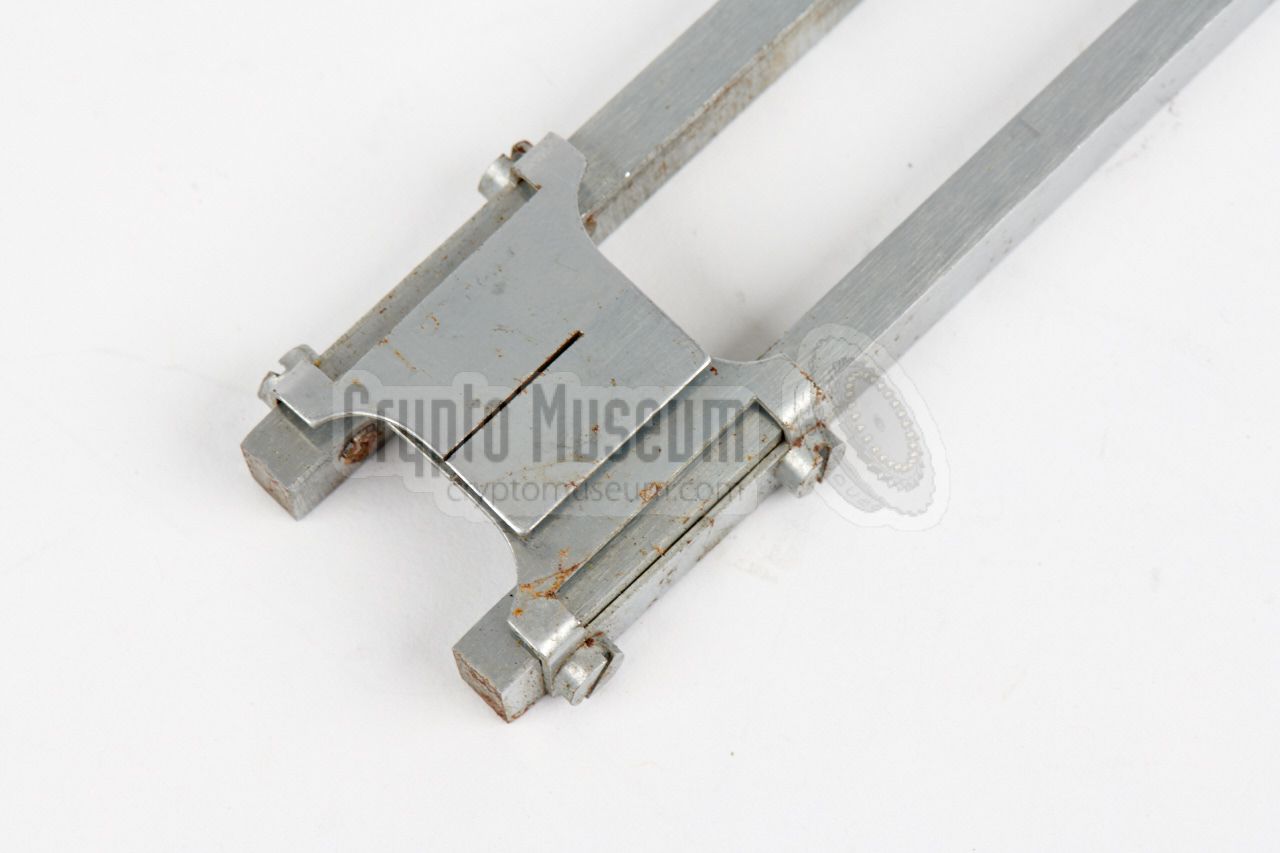
tuning fork is used, which has two overlapping plates attached
to the end of the prongs, each with a narrow slit.
|
|
|
|
In most cases, a circular disc with an alternating black and white pattern,
also known as a stroboscoping disc, is attached to (or driven by) the
common axle of the rotating object.
By looking at the rotating disc, through the overlapping slits
of an excited tuning fork, it is possible to calibrate the frequency.
If you see a rapidly alternating black and white pattern,
the frequency is far off.
|
If you see a (very) slowly alternating black and white pattern, you are
getting close. If you only see the black OR the white field,
you are spot on. The frequency of the stroboscopic disc now matches the
frequency of the tuning fork.
The actual frequency of the axle depends on the number of alternating fields
on the strobo disc.
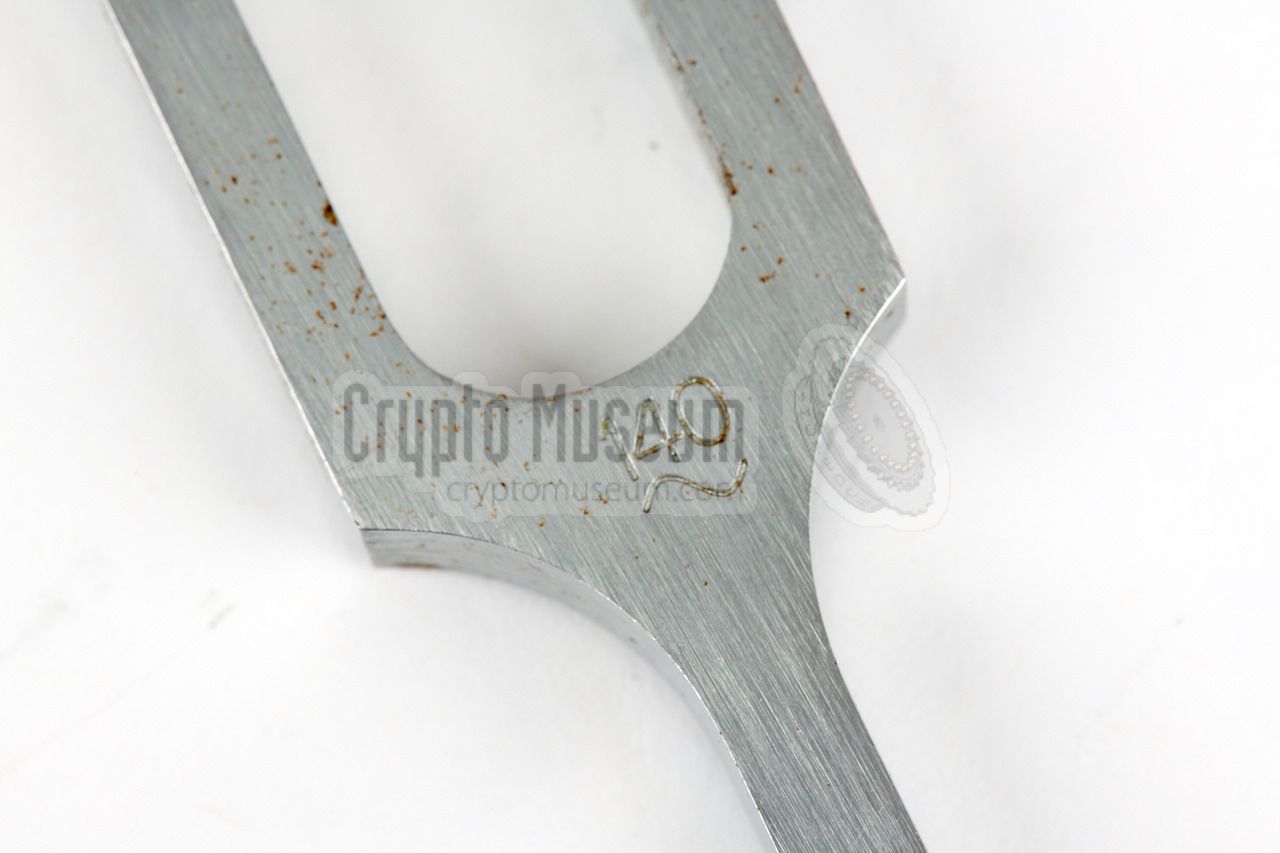
The image on the right shows the overlapping metal plates at the end
of the prongs of a tuning fork. The slit in one of them is clearly visible
here. This construction is also known as shutter or diaphragm.
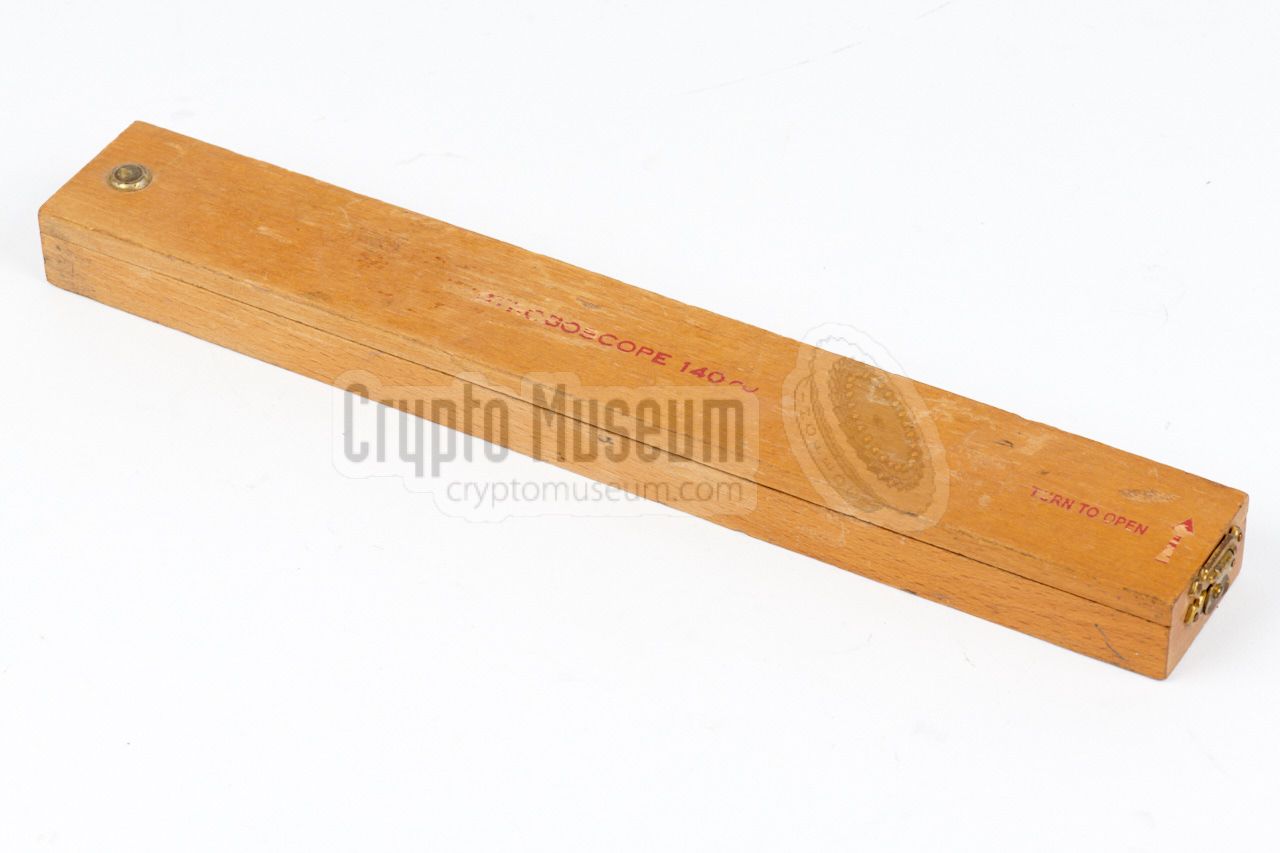
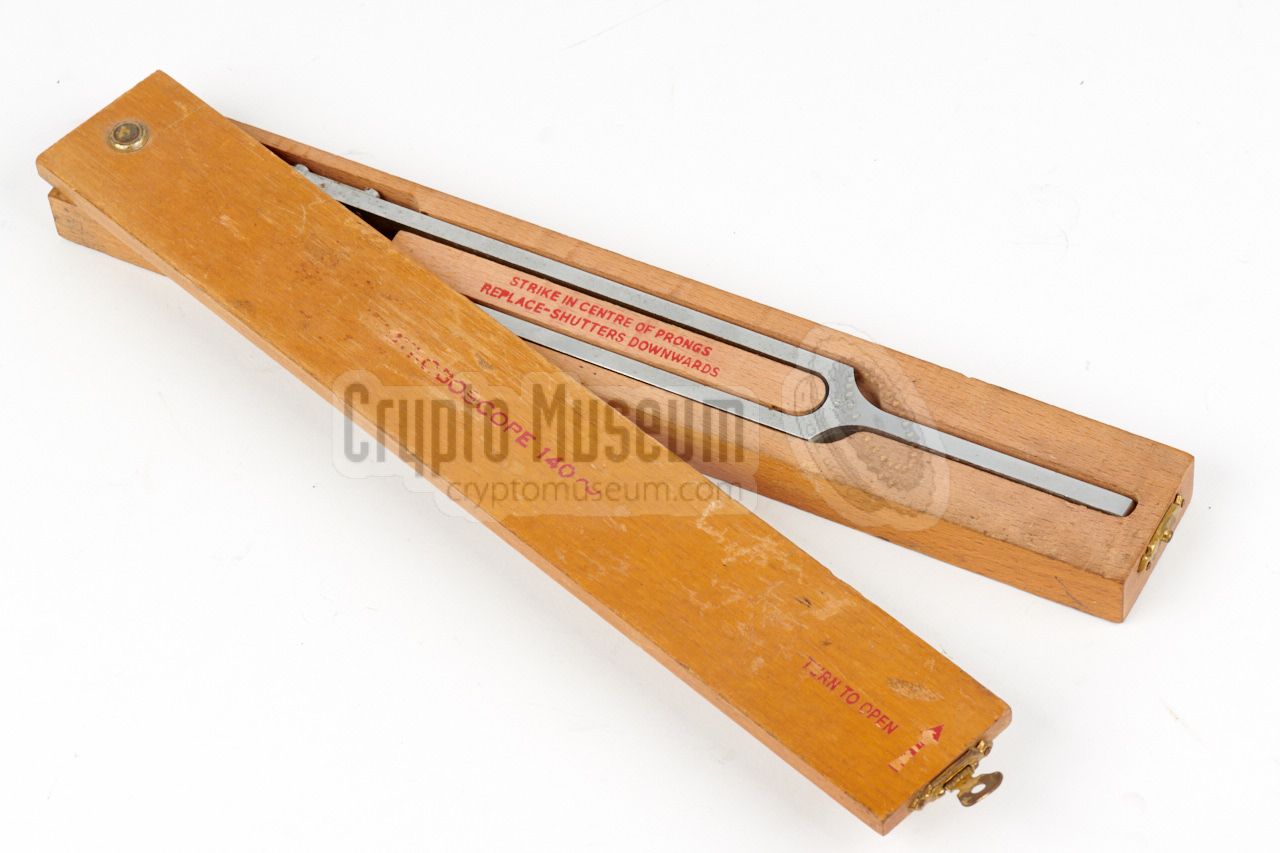
The one shown here is 140 Hz.
|
|
|
|
In practice, the machines – or actually the stroboscopic discs – were
constructed in such a way that an
industry standard 125 Hz tuning fork
could be used for speed aligment. Early electronic devices could sometimes
also be aligned with a tuning fork, although they do not contain any moving
parts. In such cases, a frequency derived from the main oscillator clock
was used to drive a neon lamp that generated the stroboscopic effect.
An example is the
Ecolex II cipher machine.
|
|
In Europe, the frequency of a tuning fork in commonly given in Hz (Hertz).
In the US, it is often specified in VPS (vibrations per second).
The following frequencies were commonly used:
|
87.6 Hz Teletype 120 Hz Teletype 123.5 Hz Teletype 125 Hz Siemens, RFT 140 Hz Creed 180 Hz Teletype 440 Hz Musical instruments (A above middle C)
|
|
|
|
Any links shown in red are currently unavailable.
If you like the information on this website, why not make a donation?
© Crypto Museum. Created: Friday 30 March 2018. Last changed: Friday, 30 March 2018 - 14:03 CET.
|
 |

|
|
|