|
|
|
|
|

|
|
← FS-5000 Batteries Receiver
Versatile Junction Box
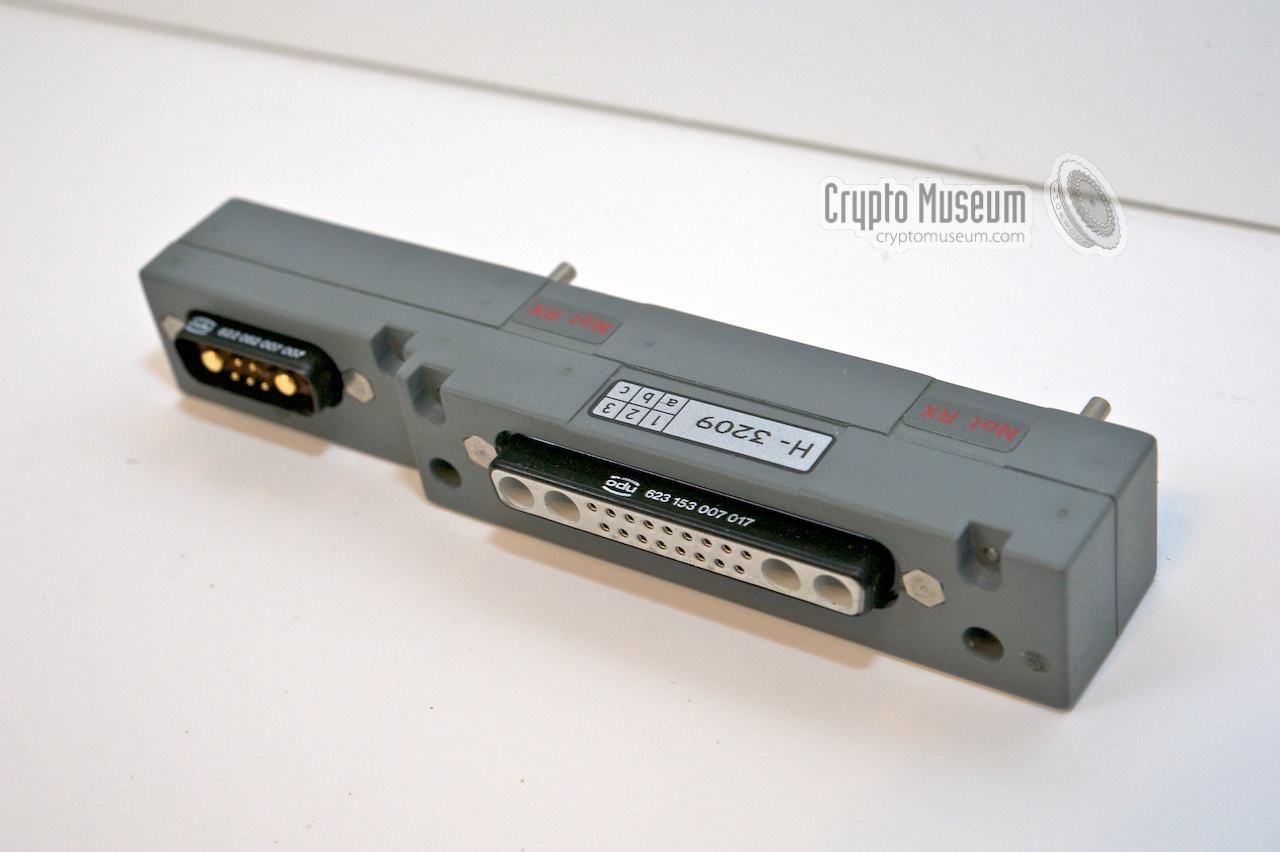
The H-Bar is a versatile extension to the FS-5000 radio station.
It is a junction box in the form of a narrow plastic bar with various
connectors at either side and allows various modules of the FS-5000 to
be used together in different configurations, with special provisions to
avoid mistakes.
|
In transit, the H-Bar was packed in the same
water-tight container
as the toolkit,
the fast discharger and the mains power cord.
The image on the right shows a typical H-Bar as it was supplied with
the FS-5000 field station. One side
has two connectors: a large one and a small one. The large connector
fits the battery charger
as well as the receiver.
When fitted to the battery charger, the other side
accepts the two batteries and allows them to be recharged automatically
by the charger/inverter.
|
|
|
|
When fitted to the rear of the receiver the small connector to
the left of the large one accepts a battery that is then used to power
the receiver. The two connectors at the other side
can not be used in this situation, hence the text labels: 'Not RX'.
To prevent batteries from being connected in this setup, two spring-loaded
pins are pushed-out of the H-Bar.
This option allows the receiver to be used stand-alone (with its own
telescopic antenna) in case of an emergency.
|
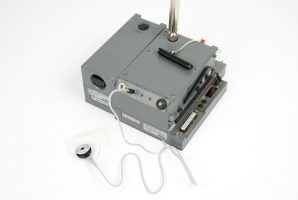
The receiver can be used as a stand-alone device, powered by a single
battery pack. In this case, the H-bar is used to connect the receiver to
the battery. This situation is shown in the image on the right.
The wide connector is fitted to the rear of the receiver, whilst the
smalle connector to its left mates with the battery pack.
The two narrow connectors at the rear side of the H-bar,
cannot be used in this configuration, as indicated by the text
labels 'Not RX'.
➤ More information
|
|
|
-
Note that some bare receiver – predominatly circulated in Germany –
may have to be modified.
|
|
|
Stand-alone battery charging
|
|
|
The H-bar can also be used to charge the battery packs directly from
the PSU/Inverter. In this case the wide connector is fitted to the
power inverter (i.e. the unit below the PSU), whilst the two battery
packs are inserted into the two narrow receptacles at the other side
of the bar.
➤ More information
|
|
|
A smaller version of the H-Bar was available as a shorter alternative.
It allowed two batteries to be charged as shown above,
but was not suitable for stand-alone use of the receiver.
The image on the right was supplied by Jim Meyer [1]. It shows
the short version of the H-Bar. It is identified with the letter 'V'.
Jim apologizes for the low quality of the image.
|
|
|
|
|
|
Any links shown in red are currently unavailable.
If you like the information on this website, why not make a donation?
© Crypto Museum. Created: Friday 20 August 2010. Last changed: Sunday, 11 January 2026 - 13:46 CET.
|
 |

|
|
|